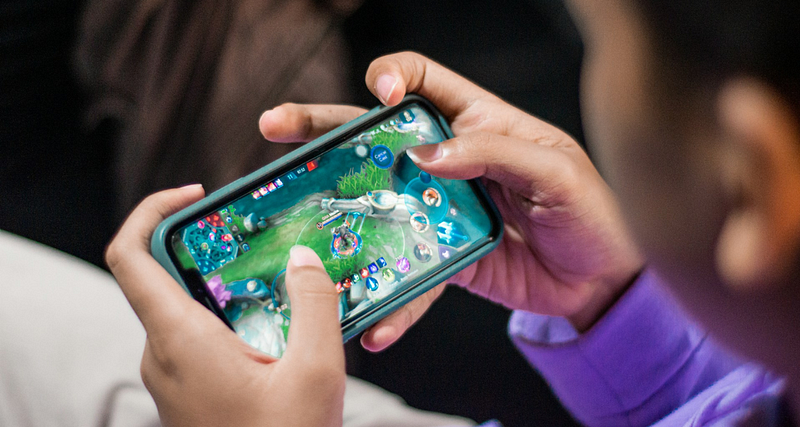
Mobile gaming isn’t just about passing time on your commute or leveling up in a candycrushing saga anymore. It’s a $100+ billion industry that’s rewriting the rules of gaming, entertainment, and even global economies.
As someone who’s spent decades in gaming, I’ve seen firsthand how quickly this sector has evolved—and where it’s headed next.
Quick Message: Want the real gaming industry scoop? No fluff, just facts. Subscribe & stay ahead: https://reinouttebrake.com/subscribe
1. Mobile Gaming’s Rise: From Underestimated to Unstoppable
Not long ago, mobile games were written off as “casual distractions.” Today, they’re neck-and-neck with PC and console gaming, even outpacing them in terms of revenue and players. Why? Accessibility. With the freemium model and increasingly powerful smartphones, anyone can dive into high-quality games without the upfront investment of a console or gaming rig.
This isn’t just a shift—it’s a seismic change that’s brought millions of new players into the ecosystem. The key learning here is that convenience and accessibility will always disrupt traditional markets. In gaming, mobile proved it.
2. Mobile-First, Cross-Platform Future
Here’s the kicker: mobile gaming didn’t just carve its own space; it’s reshaping the entire industry. Cross-platform play has made it possible for a mobile gamer in Lagos to team up with a PC player in Berlin and a console player in São Paulo. This wasn’t even a dream a decade ago. Now, it’s table stakes.
And the tech isn’t just catching up; it’s accelerating. Cloud gaming and 5G are pushing us closer to the dream of seamless, high-quality gaming experiences playable in seconds, no matter where you are. This is where mobile gaming becomes more than just a segment—it becomes the glue holding the gaming ecosystem together.
3. A Global Economy Fueled by Games
Mobile games don’t just entertain—they drive economies. From microtransactions to in-game advertising and esports, the industry is pumping billions into global GDP. And what’s truly inspiring is how emerging markets are stepping into the spotlight. Countries across Asia, Latin America, and Africa are leading the charge, proving that gaming isn’t just for traditional hubs like the US or Japan.
For developers, this is an untapped goldmine. But it’s also a reminder to focus on cultural relevance. If your game doesn’t resonate with local audiences, you’re missing a massive opportunity.
4. The Challenges Ahead: Monetization, Ethics, and Innovation
With growth comes responsibility. Monetization models like in-app purchases and ads have fueled mobile gaming’s rise, but they’ve also sparked debates around fairness and user experience. These aren’t just “industry problems”—they’re opportunities for developers and publishers to innovate and build trust with players.
5. The Vision for 2025 and Beyond
Mobile gaming is more than just entertainment—it’s the gateway to a future where games are integrated into daily life, from education to socializing to brand storytelling. At GameDive, we’re already working on tech that transforms discovery into action, empowering players to experience games, not just browse them. Imagine a world where game discovery is playable in seconds, hyperpersonalized to your tastes, and frictionless across platforms. That’s where we’re headed.
The mobile gaming revolution has been one of the most exciting stories in entertainment history, but we’re only scratching the surface. The question now is: how can we, as an industry, take this momentum and turn it into lasting value for players, developers, and the global economy?
More about Reinout te Brake