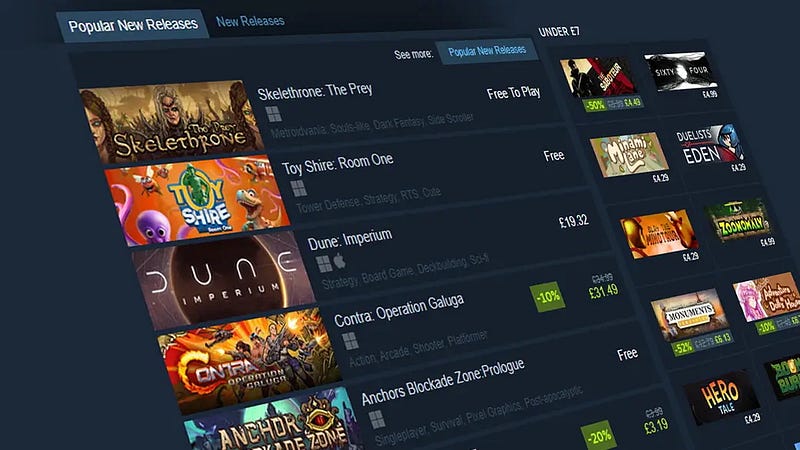
It’s 2025, and game discovery is worse than ever. Players are drowning in a sea of games, yet somehow, finding something worth playing feels harder than ever.
Developers, on the other hand, are shouting into the void — fighting against storefront algorithms, paying for overpriced ads, and hoping for a lucky viral moment on TikTok.
The truth? The system is rigged.
For years, we were told that AI-powered recommendations and curated storefronts would solve discovery. But let’s be honest — have they? Instead of uncovering hidden gems, the same big-budget games dominate, and indie titles get buried.
Players endlessly scroll, unsure of what to trust, while developers pay-to-play in a marketing war they can’t win.
But what if discovery wasn’t about ads, algorithms, or curated lists? What if players could instantly play and decide for themselves?
This article exposes why today’s game discovery is fundamentally broken — and why the future belongs to playable discovery, where players try games in seconds, without downloads, storefront bias, or misleading trailers.
The algorithmic black box has failed us. It’s time for something better. Let’s dive in.
Quick Message: Want the real gaming industry scoop? No fluff, just facts. Subscribe & stay ahead: https://reinouttebrake.com/subscribe
The Game Discovery Problem No One Wants to Talk About
Players have never had more choices, yet finding the right game to play feels frustrating, time-consuming, and often disappointing. Developers, especially indie studios, are launching games into an oversaturated market, only to see their hard work disappear into the void. Despite the rise of AI-driven recommendations, storefront curation, and influencer marketing, discovery remains an uphill battle.
Big publishers dominate storefronts, securing premium placement through advertising dollars and platform deals. Algorithmic recommendations prioritize high-retention games that keep players locked into ecosystems, while promising indie titles get buried beneath an endless scroll of noise. Even social media, once a powerful tool for organic discovery, now favors those with marketing budgets to fuel viral moments.
The result? Players are overwhelmed, developers are unheard, and discovery itself is broken.
And yet, the industry keeps pretending it works.
Read also: Astro Bot Isn’t Just Nostalgia — It’s the Future of PlayStation
A Radical Shift is Needed
If we want discovery to work—for both players and developers—we need to stop relying on algorithms, storefronts, and paid promotions. The future of game discovery isn’t about tweaking recommendation engines or hoping for better visibility. It’s about giving players instant access to gameplay—letting them try, not just browse.
Playable discovery is the solution. Instead of ads, trailers, and biased storefronts, players should be able to instantly jump into a game and decide for themselves. This shift from passive browsing to active engagement is what the industry needs to finally fix discovery.
The Harsh Reality: Why Today’s Game Discovery is Failing
Game discovery is supposed to help players find the best games, but instead, it’s leaving both players and developers frustrated. The sheer volume of new releases, algorithmic biases, unreliable social trends, and passive discovery models are all making things worse.
Read also: The Rise of the Epic Games Store: Can It Ever Compete with Steam
1. The Flood of Content is Drowning Players & Developers
The number of games being released has exploded. While more choices should be a good thing, it’s having the opposite effect — players are overwhelmed, and developers are struggling to get noticed.
- More games, less visibility: Steam alone releases 12,000+ new games a year, meaning hundreds of titles are launching every week.
- Subscription services are adding to the pile: Game Pass, PlayStation Plus, and Netflix Games add hundreds of games annually, burying individual titles under an avalanche of content.
- Choice paralysis kills engagement: When faced with too many options, players often stick to what they know rather than exploring something new. The result? Lower engagement, fewer risks, and missed opportunities for fresh games.
Instead of helping players navigate this flood of content, today’s discovery systems are making it even harder for new games to break through.
2. AI-Driven Storefronts Prioritize Hits, Not Hidden Gems
The rise of AI-driven recommendations was supposed to solve game discovery. Instead, it’s created a closed system where only the biggest titles thrive.
- Algorithmic bias is real: Platforms like Steam, PlayStation Store, and Xbox Marketplace push games that are already performing well, making it nearly impossible for new, creative, or niche titles to gain traction.
- Developers are forced to “pay to play”: If you’re not spending on ads, discounting your game, or striking platform deals, you’re invisible.
- Indie studios are at a massive disadvantage: AAA publishers have big budgets to spend on marketing and promotional slots, while smaller studios struggle to compete.
This creates a vicious cycle: the most popular games stay popular, while innovative, risk-taking titles get lost in the shuffle.
3. Social Media Discovery is Random & Unreliable
For a while, social media felt like the answer to discovery. But in 2025, relying on platforms like TikTok, YouTube, and Twitch is more of a gamble than a strategy.
- Viral moments drive sales — but they’re completely unpredictable. One lucky TikTok trend can turn a game into a hit, but for every success story, thousands of games go unnoticed.
- You can’t build a business on luck. Developers need a sustainable discovery model, not a game of viral roulette where only a few titles win.
- Twitch and Discord help, but they’re not enough. Communities can build long-term engagement, but they don’t guarantee discovery — players have to already be aware of the game to join in the first place.
Social media is a powerful tool, but it’s not a reliable discovery method. Developers need something they can actually count on.
Read also: Ubisoft’s Make-or-Break Moment: Can Assassin’s Creed Shadows Turn the Tide?
4. Subscription Services & Cloud Gaming Didn’t Fix Discovery
The rise of Game Pass, Netflix Games, and others promised an easier way for players to access games, but instead, they’ve created new problems.
- Players sample, but rarely commit. With so many options, players jump from game to game, rarely sticking with one — leading to lower retention and engagement.
- Discovery in subscription services is passive. The games you see are based on what’s added to the library, not necessarily what you’d actually love to play.
- Cloud gaming removed hardware barriers, but not discovery barriers. Platforms like Nvidia GeForce Now and Xbox Cloud let players stream games instantly, but they don’t help players discover what to play in the first place.
Subscription and cloud gaming make access easier, but they don’t solve discovery. In fact, they might be making it worse.
The Verdict? Today’s Discovery Systems Are Failing Everyone
Players aren’t finding the games they’d love. Developers are fighting to be seen. And platforms are pushing the same handful of titles, making the industry feel repetitive and stale.
So what’s the solution? The answer isn’t in better recommendations, more ads, or more social media noise. It’s in a fundamental shift toward active, playable discovery — where players try games instantly, rather than scrolling through endless lists.
Let’s talk about what that future looks like.
The Industry’s Wake-Up Call: Playable Discovery is the Future
For years, the gaming industry has relied on passive discovery — trailers, storefronts, AI-driven recommendations, and paid ads. But the data is clear: these methods aren’t working. Players are still frustrated, developers are struggling to stand out, and only a handful of titles dominate the charts.
It’s time for a radical shift. The future of game discovery isn’t about watching — it’s about playing.
Read also: From Indie Hero to Industry Villain: Can Unity Win Back Game Developers?
1. We Need to Shift From Passive to Active Discovery
For too long, game discovery has followed the same broken pattern:
Watch a trailer → Scroll through endless storefronts → Trust an ad or influencer → Finally play the game (and hope it’s good).
This doesn’t work.
- Trailers can be misleading. How many times have players bought a game based on a cinematic trailer, only to realize the gameplay is completely different?
- Storefronts push the same big-budget titles. Indie games barely get seen unless they pay for advertising.
- Ads aren’t discovery — they’re just noise. Players don’t want more marketing. They want to know if a game is actually fun before committing.
The future of game discovery isn’t in better ads, more storefront curation, or improved algorithms.
It’s in active discovery — where players instantly play and experience the game before making a decision.
- No ads.
- No misleading trailers.
- Just real gameplay.
Playable discovery removes the noise and lets players engage directly with games. This is how discovery should work in 2025.
2. The Rise of “Try-Before-You-Buy” Models
Players don’t want ads. They want demos. And the industry is already moving in this direction:
- Early access models prove that players want hands-on experiences before fully committing.
- Cloud trials (like Xbox Cloud Gaming’s game previews) let players jump in without downloads.
- Instant demos (Steam’s Next Fest, Netflix Games’ try-before-you-download) are gaining traction.
The demand is there. The tech is now making it possible.
Cloud gaming combined with smart metadata and instant play technology means that games can now be discovered in seconds — not through marketing, but through gameplay itself.
Read also: Savvy Games Group: Saudi Arabia’s Bold Play to Dominate Gaming
Thrum’s Play-to-Discover Model: The Future of Game Discovery
This is where Thrum comes in.
Rather than relying on outdated discovery methods, Thrum’s Play-to-Discover model puts players directly in the game.
Instant Play Sessions:
- Players can try 5, 10, or 30-minute sessions instantly — no downloads, no installs.
- They get a real feel for the game before making a decision.
No Ads, No Storefront Bias:
- Instead of being forced to watch ads or trust influencers, players experience the game firsthand.
- Discovery is no longer controlled by algorithms or marketing budgets — every game gets a fair shot.
A Level Playing Field for Indies & AAA Games:
- Big publishers won’t dominate the discovery process anymore.
- Indie developers, who typically struggle with visibility, finally get equal access to players.
This is how discovery should work. No fluff, no algorithms — just pure gameplay.
The Industry’s Choice: Adapt or Get Left Behind
The gaming industry has a decision to make:
Embrace playable discovery and give players what they actually want
or keep relying on outdated, frustrating, and ineffective discovery methods
The players have spoken. The technology is ready. The future of game discovery is playable.
It’s time for the industry to catch up!
The Business Case: Why Playable Discovery Works
Beyond just fixing game discovery, playable discovery is also a smarter business model — for players, developers, and platforms. It doesn’t just improve how games are found; it also boosts engagement, retention, and revenue while creating a fairer system for developers.
Let’s break down why this model is the future of the industry.
1. Higher Engagement & Better Monetization
At its core, playable discovery isn’t just about exposure — it’s about commitment. When players try a game firsthand, they’re far more likely to stick with it compared to those who were simply convinced by an ad or a trailer.
- Playable sessions drive stronger retention. If players get hands-on experience and enjoy the game, they’re more likely to continue playing — reducing drop-off rates.
- More informed players = fewer refunds & abandoned downloads. No more disappointment from misleading trailers or hype that doesn’t match reality. Players know exactly what they’re getting.
- Higher conversion rates than traditional ads. Instead of paying for clicks that may not convert, developers can let the gameplay sell itself.
Why this matters:
– More engaged players → higher retention → more in-game spending & subscriptions.
– Fewer refunds → higher net revenue per player.
– Playable discovery delivers real, measurable impact — beyond what ads can achieve.
For developers, it’s not just about getting players in the door — it’s about keeping them there.
Read also: Xsolla Just Changed the Game — Here’s What It Means for You
2. Fairer Discovery for Developers
Right now, the game industry is a pay-to-win system. If you’re not spending on ads, featured storefront placement, or influencer marketing, you’re invisible. This is especially devastating for indie and mid-tier developers who can’t compete with AAA marketing budgets.
Playable discovery changes that.
- No more paying for algorithmic exposure. Instead of relying on storefront biases, developers get visibility based on gameplay — not on how much they spend.
- A real alternative to expensive CPI-based marketing. Cost-per-install (CPI) advertising has become more expensive and less effective over time. Playable discovery removes the guesswork — players engage because they like the game, not because they were tricked into clicking an ad.
- Revenue-sharing models tied to engagement create a more sustainable ecosystem. Instead of throwing money at ads that may or may not work, developers can pay based on actual playtime and interest — aligning costs with real engagement.
Why this matters:
– Developers focus on making great games, not just out-marketing competitors.
– Indie studios finally have a discovery system that doesn’t require massive ad budgets.
– Monetization is directly tied to engagement, creating long-term sustainability.
The Bottom Line: Playable Discovery is Good Business
For Players: They get instant access to gameplay, making smarter decisions.
For Developers: They get higher engagement and fairer visibility without overspending on ads.
For Platforms: They get better retention, more satisfied players, and higher monetization rates.
This isn’t just a better way to discover games — it’s the future of the gaming business.
The question is: Will the industry embrace it, or will it cling to a broken system?
The Industry Must Act Now
The gaming industry is at a breaking point when it comes to discovery. Players are frustrated. Developers are struggling. Platforms are failing to connect the right games with the right audiences.
Despite promises of better storefront curation, AI-powered recommendations, and influencer-driven marketing, game discovery is still broken. The numbers don’t lie — more games are launching than ever before, yet only a small fraction get the visibility they deserve. The result? Players miss out on amazing games, and developers are forced to compete in an unfair, pay-to-play system.
The solution is clear: Playable discovery isn’t just an option — it’s the only real fix.
It’s time for the industry to move beyond passive storefront browsing and into an era of active, instant play experiences. Instead of hoping a trailer, ad, or algorithm does the job, let the gameplay speak for itself.
Developers and Platforms Must Adapt Now — Or Get Left Behind
For Developers: If you’re tired of battling storefronts, ad costs, and algorithms, playable discovery gives you a fair shot. Let players experience your game directly instead of hoping they stumble upon it.
For Platforms: If you want higher player retention, more engagement, and better monetization, active discovery is the answer. Give players instant access to new experiences, and they’ll stay longer.
For Publishers: If you want to increase conversions and reduce wasted marketing spend, playable discovery ensures that your budget is spent on real engagement, not empty clicks.
The Future of Game Discovery is Playable — Will You Be Part of this Change?
The gaming industry has a choice: Keep relying on outdated discovery methods — or embrace the future.
If you’re a developer, publisher, or platform leader, it’s time to rethink game discovery. The technology is here. The demand is there. The players are ready.
So the real question is — will you be?
Even Rob Fahey agrees — game discovery is broken. And he’s right. At the time of writing, there was no real solution in sight. But here’s the thing: the future wasn’t here yet. Thrum didn’t exist.
For years, we’ve all been stuck in the same cycle — scrolling through storefronts, hoping an algorithm picks up a hidden gem, or crossing our fingers for a viral moment. Fahey wrote that discoverability is a battle that never ends, and while we agree it’s a constant challenge, that doesn’t mean it’s unsolvable. The missing piece has always been letting players actually play before they decide — and that’s exactly what playable discovery delivers.
So, Rob, if you’re reading this — let’s chat. We think you’ll love what we’re building.
Stay Connected: Gaming Trends, Insights, and Your Take
Thank you for reading. Every day I look at the gaming industry, read up on things, and talk to industry people. In my Medium blogs, I try to give my readers and 1.5K followers a solid sense of trends, analysis, investments, and more in gaming. If you found this interesting, I’d appreciate it if you shared the article — but even more, I’d love to hear your thoughts in the comments! If you like to connect on Linkedin, feel free to send me an invite! And don’t forget to Subscribe Today! Get exclusive gaming industry insights from Reinout te Brake — a veteran with real data, deep expertise, & game-changing perspectives.