
Ubisoft was once a powerhouse in gaming, shaping the industry with franchises like Assassin’s Creed, Far Cry, and Rainbow Six.
Today, it’s a company in crisis so say at least. Revenues are plummeting, investors are losing confidence, and gamers are walking away.
Years of repetitive game design, failed projects, and leadership missteps have left Ubisoft at a breaking point.
Layoffs, studio closures, and a rumored Tencent buyout only add to the uncertainty.
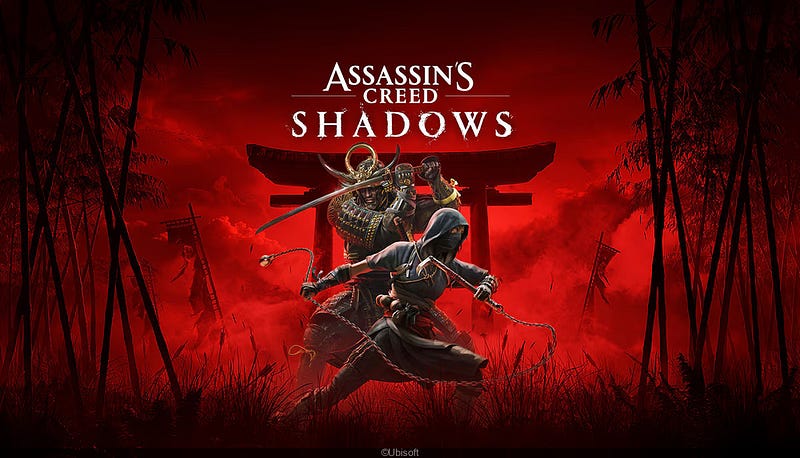
Now, everything hinges on Assassin’s Creed Shadows — a game that could either restore faith in the brand or mark the beginning of its downfall.
The question is, can Ubisoft still turn things around, or is this the inevitable decline of a gaming giant?
Introduction: What’s Happening With Ubisoft?
Ubisoft used to be one of the most exciting names in gaming. Assassin’s Creed, Far Cry, Rainbow Six, and Splinter Cell weren’t just games; they were industry-defining franchises that pushed boundaries, set trends, and delivered best-in-class experiences.
At its peak, Ubisoft was synonymous with open-world innovation, immersive storytelling, and technical prowess. Investors saw it as a AAA powerhouse competing with the likes of Rockstar, EA, and Activision-Blizzard.
Read also: The Olympic Esports Games 2027: A Game-Changer or a Missed Opportunity?
Fast forward to today, and the story looks very different.
Ubisoft is bleeding money, struggling to deliver games on time, and facing serious questions about its future. The numbers paint a grim picture:
The Financial Decline:
Revenue down 31.4% year-on-year, dropping to €990 million in the last nine months.
Net bookings fell 51.8% in Q3 (from €627 million in 2023 to €301.8 million in 2024).
Back-catalogue bookings declined 27.7%, meaning even their older, reliable titles aren’t bringing in the expected revenue.
Ubisoft stock has collapsed 85% since 2021 — losing billions in market value.
The Delays, Cancellations, and Struggles to Execute:
Skull & Bones — a game that cost over $200 million — has been in development hell for a decade and still isn’t a commercial success.
Assassin’s Creed Shadows was delayed twice before settling on a March 20, 2025 release. Ubisoft is betting everything on this game to turn things around.
XDefiant, a free-to-play shooter, was officially canceled in December 2024 after failing to attract or retain players.
Star Wars Outlaws — expected to be a blockbuster — had underwhelming early impressions, and its budget reportedly exceeded projections by 30% over AC Mirage’s development cost.
The Workforce Crisis: Layoffs, Studio Closures, and Cost Cuts
In the past two years, Ubisoft has laid off over 1,700 employees across multiple studios.
In January 2025, 185 more jobs were cut in Ubisoft Düsseldorf, Stockholm, and Reflections, and the Ubisoft Leamington studio was completely shut down.
In December 2024, Ubisoft closed two more production studios and laid off 277 employees, citing cost-cutting and restructuring efforts.
Despite layoffs, Ubisoft’s total headcount remains above 19,000, indicating that their operating costs remain high.
Read Also: From Indie Hero to Industry Villain: Can Unity Win Back Game Developers?
The Leadership & Strategic Crisis: Where is Ubisoft Going?
- Investors are losing faith in leadership, with CEO Yves Guillemot criticized for stubborn decision-making and failure to modernize Ubisoft’s approach.
- The company has been desperately slashing costs, already surpassing its €200 million cost-cutting target ahead of schedule.
- Ubisoft appointed advisors to explore “strategic options” — which many see as preparation for an eventual buyout or major restructuring.
- Tencent’s rumored acquisition of Ubisoft has resurfaced, adding uncertainty to the company’s future.
The Bigger Problem: An Identity Crisis
The financial struggles, project mismanagement, and workforce reduction are symptoms of a deeper issue: Ubisoft no longer feels like Ubisoft.
The company that once pioneered open-world gameplay, ambitious storytelling, and tight stealth-action mechanics has been recycling the same formulas, chasing trends, and failing to execute bold new ideas.
Gamers feel burned out by repetitive Ubisoft game design.
Developers are leaving due to leadership struggles and creative constraints.
Investors want results, but Ubisoft keeps delaying games and missing financial targets.
So how did they get here? And more importantly — can Ubisoft turn things around before it’s too late?
Let’s break it down. Quite a ride, sit tight!
Part 1: The Golden Years — How Ubisoft Became a Powerhouse
There was a time when Ubisoft was untouchable. It was a company that set trends instead of following them, pushing the boundaries of open-world gameplay, immersive storytelling, and technical innovation.
Between 2007 and 2016, Ubisoft was at its peak, churning out some of the most iconic games of the era, dominating sales charts, and earning a strong reputation among both players and critics.
The Ubisoft Formula That Worked
Ubisoft didn’t just make great games — they built a winning formula that kept players engaged for hundreds of hours.
Massive Open Worlds — Ubisoft perfected the open-world experience, giving players sprawling landscapes to explore in Assassin’s Creed, Far Cry, and Watch Dogs.
Addictive Gameplay Loops — Their signature “explore, unlock, conquer” formula made progression feel rewarding and satisfying.
Iconic Villains & Strong Characters — Ubisoft mastered the art of memorable antagonists — characters that players loved to hate.
Vaas Montenegro (Far Cry 3) — One of gaming’s greatest villains, famous for his “Definition of Insanity” monologue.
Edward Kenway (Assassin’s Creed IV: Black Flag) — The pirate-turned-Assassin that made Black Flag a fan favorite.
Haytham Kenway (Assassin’s Creed III) — The surprise twist character who became more interesting than the protagonist.
Consistent, High-Quality Output — Unlike many publishers, Ubisoft managed to release major AAA games annually without losing quality — especially with Assassin’s Creed, Far Cry, and Just Dance.
This strategy dominated the late 2000s and early 2010s, cementing Ubisoft as a top-tier publisher, on par with Rockstar, EA, and Activision-Blizzard.
Read also: Savvy Games Group: Saudi Arabia’s Bold Play to Dominate Gaming
The Games That Defined Ubisoft’s Golden Era
Each major Ubisoft franchise had a turning point that put it on the map:
Assassin’s Creed II (2009) — Transformed the franchise into a blockbuster, introducing the legendary Ezio Auditore and revolutionizing open-world historical storytelling.
Far Cry 3 (2012) — A genre-defining FPS that introduced Vaas, refined Ubisoft’s signature open-world mechanics, and set the stage for the franchise’s success.
Watch Dogs (2014) — While its overhyped launch led to some disappointment, Watch Dogs introduced a hacking-based open-world concept that was fresh and unique.
Rainbow Six Siege (2015) — One of Ubisoft’s biggest comeback stories — launched to mediocre reviews, but Ubisoft stuck with it, turning it into a top-tier esports title with a thriving player base.
During this period, Ubisoft was known for creativity, innovation, and strong execution.
But it wasn’t just the games — it was the business strategy that made Ubisoft unstoppable.
Ubisoft’s Smart Business Strategy
Beyond great games, Ubisoft was running a tight business operation that fueled its rapid rise.
A Global Studio Network — Ubisoft’s multi-studio development strategy allowed them to work on multiple AAA games simultaneously. Studios in Montreal, Toronto, Paris, Singapore, and San Francisco all contributed to a steady stream of releases.
Strong Post-Launch Support — Ubisoft was one of the first major publishers to invest heavily in long-term live-service updates.
Rainbow Six Siege went from a failed launch to one of the biggest esports shooters in the world.
The Division grew into a strong online shooter with a dedicated fanbase after multiple updates.
Innovation & Risk-Taking — Unlike some publishers who played it safe, Ubisoft took big swings with new IPs and ambitious projects:
- For Honor (2017) — A unique medieval melee combat game that carved out its niche.
- The Division (2016) — A bold attempt at a shared-world online RPG, blending RPG mechanics with tactical shooting.
- Watch Dogs (2014) — A modern hacker-based open-world, introducing new ideas to the genre.
At this point, Ubisoft was an industry leader — balancing high-quality franchises, innovation, and strong financial performance.
It truly seemed like nothing could stop them.
Read also: Overwolf: The Future of User-Generated Content in Gaming
But Then, Something Changed.
The same formula that built Ubisoft’s success eventually became its biggest weakness. The open-world gameplay loop started feeling repetitive.
The company prioritized monetization over innovation. Games started launching with bugs, performance issues, and rushed development. Financial struggles and leadership missteps sent Ubisoft into decline.
The company that once defined innovation in gaming became known for playing it safe.
So what went wrong?
Part 2: The Downfall — Where It All Went Wrong
Ubisoft’s strengths became its weaknesses. What once felt fresh and innovative became stale, predictable, and bloated.
The winning formula that built Assassin’s Creed, Far Cry, and Watch Dogs was copied and pasted too many times, leading to player fatigue, declining sales, and frustrated investors.
At the same time, Ubisoft’s management made critical missteps, failing to adapt to industry shifts, manage costs, and execute on big ideas.
Here’s how it all fell apart.
1. Open-World Fatigue: When a Formula Becomes a Burden
Ubisoft’s open-world design was revolutionary in the early 2010s. But instead of evolving, they overused it, leading to burnout among both players and critics.
Every Ubisoft game started feeling too similar.
- The same tower-climbing mechanics to unlock maps.
- Side quests that felt like busywork rather than meaningful content.
- A checklist approach to open worlds, making them feel more like chores than adventures.
Player Fatigue Set In.
- Assassin’s Creed Valhalla stretched over 100+ hours but felt bloated rather than engaging.
- Far Cry 6 was criticized for being too formulaic, with little innovation compared to its predecessors.
- Ghost Recon Breakpoint suffered from generic gameplay and uninspired mission design.
Even new franchises started feeling like reskinned versions of existing games.
- Immortals Fenyx Rising was essentially “Assassin’s Creed meets Breath of the Wild” with little new to offer.
Read also: Xsolla Just Changed the Game — Here’s What It Means for You
The Result? Players Started Walking Away.
Gamers stopped getting excited for Ubisoft releases, knowing they’d be playing the same experience with a new skin.
Ubisoft failed to recognize the shift in gaming preferences, where players started valuing quality over quantity.
And that was just the beginning of their problems.
2. Financial Decline & Investor Panic
Ubisoft’s financial freefall over the past few years has been staggering.
Revenue dropped by 31.4% in the last nine months.
Net bookings collapsed by 51.8% in Q3 — a direct reflection of weaker game sales.
Back-catalog sales fell by 27.7%, meaning even older games aren’t generating expected revenue.
Ubisoft stock lost 85% of its value since 2021 — wiping out billions in market capitalization.
Why did this happen?
- Ballooning development costs. Ubisoft poured money into massive projects, but many failed to generate expected returns.
- Delays & Cancellations. Games that should have been revenue drivers were delayed repeatedly or canceled outright, leaving financial holes in Ubisoft’s balance sheet.
- Investors Lost Confidence. The combination of declining sales, bad management decisions, and missed deadlines made investors skeptical about Ubisoft’s future.
Ubisoft was spending too much and delivering too little.
Even their once-reliable franchises were underperforming, and the company struggled to justify its costs.
3. Skull & Bones & Other High-Profile Failures
Ubisoft’s inability to execute has become a running joke in the gaming industry.
The Skull & Bones Disaster
Development Cost: Over $200 million.
Development Time: 10+ years — and still not a commercial hit.
What Happened?
- Originally planned as a multiplayer naval combat game, inspired by Assassin’s Creed IV: Black Flag.
- Development hell due to constant creative changes, management turnover, and failed prototypes.
- When it finally launched, it lacked the depth and excitement players expected.
This wasn’t just a bad game — it was a financial black hole.
Read also: Supercell’s Biggest Lesson: Why Brawl Stars Won Big and Squad Busters Didn’t
Other Ubisoft Failures
XDefiant (2024) — Ubisoft’s attempt at a free-to-play arena shooter was shut down after failing to attract players.
Ghost Recon Frontline (2022) — Announced as a battle royale-style Ghost Recon, but backlash forced Ubisoft to cancel it within months.
Prince of Persia: The Sands of Time Remake — Originally planned for 2021, now stuck in development limbo due to technical issues and leadership struggles.
When Ubisoft Took Risks, They Failed to Deliver.
Instead of learning from past mistakes, they kept repeating them — over-promising, under-delivering, and burning millions on projects that went nowhere.
4. Leadership & Layoffs: The Breaking Point
Ubisoft’s biggest problem isn’t just bad game design — it’s bad leadership.
The Layoffs & Studio Closures
Between 2022–2025, Ubisoft laid off over 1,700 employees.
They closed studios in the UK, Germany, and Sweden as part of a massive cost-cutting effort.
Most recently, Ubisoft shut down Ubisoft Leamington (UK) in January 2025, cutting 185 more jobs.
Why Are So Many Employees Leaving?
- Developers are frustrated with Ubisoft’s lack of direction and constant game delays.
- Ubisoft’s Montreal and Paris teams have seen high turnover, with top talent leaving for other studios.
- The industry-wide shift to remote work made it easier for talent to leave, making Ubisoft’s work culture harder to maintain.
Read also: Roblox Just Got a Reality Check — Here’s What the Game Industry Should Learn
CEO Yves Guillemot: A Leadership Problem?
Many inside Ubisoft blame CEO Yves Guillemot for failing to adapt to the modern gaming industry.
Guillemot’s biggest leadership failures:
- Refusing to cancel failing projects sooner. Skull & Bones should have been scrapped years ago instead of dragging on and burning $200M+.
- Overcommitting to trends that didn’t work. Ubisoft tried to force live-service models into single-player franchises, but players rejected it.
- Lack of a clear vision for Ubisoft’s future. The company is stuck between AAA open-world games and chasing the live-service trend, with no clear direction.
Investors Are Losing Patience.
With declining revenue, stock collapse, and poor leadership, there are now serious discussions about:
- A Tencent buyout or takeover
- A major restructuring of Ubisoft’s leadership
- Breaking up the company into smaller, more focused teams
The Big Question: Can Ubisoft Recover?
Ubisoft’s golden age is long behind it, and the company is now fighting for survival. But they still have one last shot at turning things around — Assassin’s Creed Shadows.
Ubisoft’s future depends on this game.
Preorders are strong, but if it underperforms, Ubisoft could be facing an even bigger crisis. If Shadows is a hit, it could buy Ubisoft time to course-correct.
But, if it fails, the company may never recover.
Part 3: Can Ubisoft Recover?
Ubisoft is at a crossroads. After years of declining sales, failed projects, and frustrated fans, the company still has one last chance to turn things around.
That chance comes in the form of Assassin’s Creed Shadows, a game that could either stabilize Ubisoft’s future or send it deeper into crisis.
Assassin’s Creed Shadows: Ubisoft’s Last Hope?
For years, fans have been asking for an Assassin’s Creed set in Feudal Japan — and Ubisoft is finally delivering.
Release Date: March 20, 2025
Preorders are “tracking solidly”, on par with Assassin’s Creed Odyssey, the franchise’s second-best-selling game.
First major AC game set in Japan — a setting fans have requested for over a decade.
Why This Game Matters for Ubisoft’s Survival:
- Assassin’s Creed is Ubisoft’s most profitable franchise.
- Shadows needs to succeed financially to keep investors on board.
- A successful launch could boost consumer trust and prove that Ubisoft can still make high-quality games.
But there’s a problem.
Preorders aren’t a guarantee of success.
- Odyssey had strong preorders, but Valhalla’s sales eventually outpaced it.
- Ubisoft’s reputation has taken a hit — players might be skeptical about post-launch quality.
- Live-service elements, potential microtransactions, and future monetization plans could alienate core fans.
If Shadows is a hit, it buys Ubisoft time to course-correct. If it flops, the company will face an even bigger financial disaster.
Read also: The Battle for the Open App Store: Why Google’s Appeal Matters
What Ubisoft Needs to Do to Fix This
If Ubisoft wants to survive and thrive again, it can’t rely on Assassin’s Creed alone. The company needs real change — and fast.
1. Smaller, Focused Games — Depth Over Size
Ubisoft’s open worlds have become too big, too bloated, and too repetitive.
Games shouldn’t be about size — they should be about depth.
Players want handcrafted, meaningful content — not 100-hour checklists.
Look at Elden Ring, Baldur’s Gate 3, and God of War. These games succeed because of depth, not map size.
Solution?
- Stop making every Assassin’s Creed a giant RPG. Not every AC needs to be Valhalla-sized.
- Experiment with smaller-scale projects. Games like Hi-Fi Rush, Hellblade, and Plague Tale prove that not every game needs a $200M budget to be successful.
2. Stop Chasing Trends — Focus on What Ubisoft Does Best
Ubisoft wasted years chasing trends instead of doubling down on its strengths.
Failed Trends Ubisoft Tried:
NFTs — Gamers rejected Ubisoft Quartz almost instantly.
Battle Royale — Hyper Scape flopped and was shut down in less than a year.
Live-Service Assassin’s Creed — AC Infinity is still in development, but skepticism is high.
Shooter Clones — XDefiant was supposed to compete with Call of Duty but never took off.
Solution?
- Embrace what made Ubisoft great. Assassin’s Creed should focus on deep single-player narratives.Splinter Cell should focus on tight stealth mechanics.Far Cry needs fresh innovation — not recycled ideas.
- Stop forcing live-service into every game. Single-player games still sell incredibly well. Look at Elden Ring, Star Wars Jedi: Survivor, and Spider-Man 2.
3. Rebuild Player Trust — Listen to Feedback
Gamers have lost trust in Ubisoft, and for good reason. Broken launches, excessive monetization, and repetitive formulas have damaged its reputation.
Recent Ubisoft Blunders:
Skull & Bones — Over-promised, under-delivered.
Ghost Recon Breakpoint — Launched with NFTs, disappointing gameplay, and microtransactions galore.
The Division 2’s lackluster support alienated its fanbase.
Solution?
- Actually listen to players. If people want a proper Splinter Cell, don’t just make a remake — make a new one.Don’t force online elements into single-player games.
- Deliver games that work at launch. Ubisoft games have a reputation for launching buggy. Shadows cannot afford to be broken at release.
- Engage the community. CD Projekt Red rebuilt trust with Cyberpunk 2077. Ubisoft needs to do the same for its major franchises.
4. Fix Leadership Issues — The Yves Guillemot Problem
Ubisoft’s biggest obstacle might be at the top.
CEO Yves Guillemot has been running Ubisoft since 1986.
He’s been criticized for being slow to adapt and failing to make hard decisions.
Investors and employees have lost confidence in his leadership.
Ubisoft’s Leadership Problems:
Too many failing projects dragged on for years.
Too much focus on financial gimmicks (NFTs, live service) instead of making great games.
Delayed decision-making, leading to repeated game postponements.
Solution?
- Either Guillemot adapts, or Ubisoft needs a new CEO.
- Appoint a strong creative director — someone with a clear vision for the company’s future.
- Empower Ubisoft’s studios to be more creative. Right now, corporate strategy is hurting development.
If Ubisoft doesn’t change leadership, it risks becoming irrelevant in the gaming industry.
The Make-or-Break Moment
Ubisoft isn’t dead — yet. But this is their last chance to turn things around.
The next 12–24 months will determine whether Ubisoft:
Reclaims its status as a top-tier publisher
Gets acquired by Tencent or another major company
Breaks up into smaller divisions or shifts into a new business model
Assassin’s Creed Shadows is Ubisoft’s biggest test. If it succeeds, it buys time to fix their problems. If it fails, Ubisoft could face a financial and reputational disaster.
The question remains: Will Ubisoft finally learn from its mistakes? Or is this just another delay before the inevitable?
What do you think? Can Ubisoft turn things around, or is this the beginning of the end?
Stay Connected: Gaming Trends, Insights, and Your Take
Thank you for reading. Every day I look at the gaming industry, read up on things, and talk to industry people. In my Medium blogs, I try to give my readers and 1.5K followers a solid sense of trends, analysis, investments, and more in gaming. If you found this interesting, I’d appreciate it if you shared the article — but even more, I’d love to hear your thoughts in the comments! If you like to connect on Linkedin, feel free to send me an invite! And don’t forget to Subscribe Today! Get exclusive gaming industry insights from Reinout te Brake — a veteran with real data, deep expertise, & game-changing perspectives.
For a deeper insights into Ubisoft’s current situation, check out this deep dive
