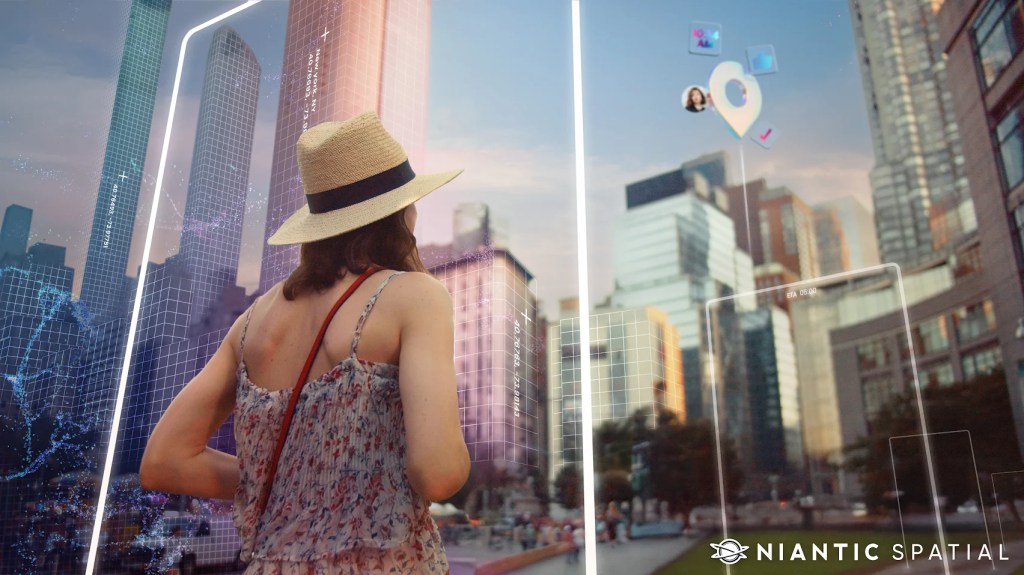
Niantic has sold Pokémon GO and its gaming division to Scopely for $3.5B—marking a major shift from AR gaming to AI-driven geospatial technology. But can Scopely keep Pokémon GO alive, and will Niantic Spatial succeed in the AI revolution? Explore the industry-changing deal, its risks, and what it means for the future of gaming.
So, let’s proceed with: Inside the $3.5B Scopely acquisition and what it means for the future of AR gaming and AI-driven spatial intelligence.
Introduction: The End of an Era or the Start of Something Bigger?
For nearly a decade, Niantic defined AR gaming. Pokémon GO wasn’t just a mobile game—it was a global phenomenon, bringing millions of players outside to explore their surroundings in ways never seen before. Since its 2016 launch, the game has:
- Generated over $7.9 billion in revenue
- Surpassed 100 million active players in 2024
- Created an entirely new genre of location-based gaming
But despite its record-breaking success, Niantic has walked away from gaming.
In a landmark $3.5 billion deal, Niantic sold its entire gaming division—including Pokémon GO, Pikmin Bloom, and Monster Hunter Now—to Scopely, a mobile gaming powerhouse backed by Saudi Arabia’s Savvy Games Group. Meanwhile, Niantic is reinventing itself as a geospatial AI company, betting its future on machine learning, digital mapping, and augmented reality infrastructure.
This raises three massive questions:
- Why did Niantic abandon its most successful business?
- Can Scopely keep Pokémon GO thriving?
- Is Niantic’s AI pivot a stroke of genius or a massive risk?
This article breaks down the real reasons behind Niantic’s dramatic shift, the implications of Scopely’s acquisition, and how this move reshapes the future of gaming and AI.
I. Why Did Niantic Sell Its Gaming Business?
For an outsider, Niantic’s decision to sell its gaming empire might seem baffling. Pokémon GO remains one of the most successful mobile games of all time, bringing in over $1 billion in revenue in 2024 alone. But beneath the surface, cracks were forming—rising costs, failed experiments, and a shifting industry landscape pushed Niantic toward a new direction.
Here’s why the company abandoned gaming and pivoted to AI.
1. Pokémon GO Was a Lightning-in-a-Bottle Moment
Niantic’s entire gaming success was built on Pokémon GO, but every attempt to replicate it failed.
❌ Harry Potter: Wizards Unite (2019) – Shut down after two years.
❌ Catan: World Explorers (2021) – Canceled before launch.
❌ NBA All-World (2023) – Shut down within a year.
These failures revealed an ugly truth: Pokémon GO’s success wasn’t just about Niantic’s AR technology—it relied on Pokémon’s global fanbase, nostalgia, and social gaming dynamics. Without a similarly strong IP, Niantic couldn’t recreate the magic.
2. Running AR Games Is Expensive and Difficult
Unlike traditional mobile games, location-based AR games require massive infrastructure:
🔹 Real-time geolocation services – Expensive server costs to track millions of players.
🔹 Live events & global operations – Maintaining player engagement is costly.
🔹 Licensing & partnerships – Pokémon rights are owned by The Pokémon Company, cutting into profits.
While Pokémon GO still made money, Niantic’s margins were shrinking—and investors took notice.
3. The AI Boom Opened a More Profitable Path
While its gaming division struggled, Niantic was building something else: geospatial AI technology.
Instead of fighting to keep its games afloat, Niantic saw a bigger opportunity—AI-powered digital mapping, machine learning for AR applications, and enterprise-focused solutions.
🚀 Geospatial AI is a $200 billion industry by 2030
🚀 Niantic’s tech can be applied in logistics, robotics, and urban planning
🚀 AI-based revenue models promise higher margins than gaming
Rather than continue an expensive battle in mobile gaming, Niantic cashed out and pivoted—selling its gaming division for $3.5 billion while launching Niantic Spatial Inc., a new AI company focused on geospatial computing.
II. Can Scopely Keep Pokémon GO Alive?
Niantic’s exit from gaming handed Scopely a golden opportunity: acquiring one of the most successful mobile games in history. But can Scopely sustain Pokémon GO’s success—or will the game decline under new leadership?
This acquisition is a high-stakes bet. While Pokémon GO still generates massive revenue, the game faces aging player engagement, monetization challenges, and a skeptical fanbase. Scopely must navigate these risks carefully to keep its $3.5 billion investment from turning into a mistake.
1. Why Scopely Wanted Niantic’s Games
Scopely, a mobile gaming giant behind Monopoly GO! and Marvel Strike Force, thrives on live-service games. The company specializes in monetizing long-term player engagement—making Pokémon GO a perfect fit for its strategy.
✅ A Reliable Cash Machine – Pokémon GO alone made $600M+ annually, providing stable revenue.
✅ A Global Audience – Over 100 million players still actively play in 2024, creating a huge built-in player base.
✅ Proven Longevity – Unlike most mobile games, Pokémon GO has survived 8+ years, proving its lasting appeal.
For Scopely, this deal is about sustaining and maximizing the game’s long-term profitability.
2. The Risks – Can Scopely Avoid Killing Pokémon GO?
Buying Pokémon GO is one thing—keeping it alive is another. Scopely faces three major risks:
🚨 1. Player Backlash & Trust Issues
- Pokémon GO fans are notoriously vocal.
- Any aggressive monetization changes could trigger a mass player exodus.
- Scopely must balance revenue generation with player goodwill—or risk losing its biggest asset.
🚨 2. Keeping AR Innovation Alive
- Niantic’s gameplay innovations fueled Pokémon GO’s success.
- Can Scopely continue innovating, or will the game stagnate?
- If Scopely focuses too much on monetization, the game’s appeal may decline.
🚨 3. The Saudi Arabia Connection
- Scopely is owned by Saudi Arabia’s Savvy Games Group.
- This raises geopolitical concerns about data privacy and corporate influence.
- Western markets might react negatively to increasing Saudi control in gaming.
If Scopely mismanages these risks, Pokémon GO could lose players—and revenue—fast.
3. What Will Scopely Do Next?
To keep Pokémon GO profitable, Scopely will likely focus on:
🔹 More In-Game Purchases & Monetization Events – Expect more frequent paid events, premium items, and battle passes.
🔹 Major Gameplay Expansions – New features, mechanics, and cross-game collaborations could reinvigorate engagement.
🔹 Live Events & Esports Growth – Bigger in-person events could boost revenue and engagement.
Scopely’s best bet is to evolve Pokémon GO without alienating its core player base—a delicate balancing act that will determine whether this $3.5 billion gamble pays off.
III. The Birth of Niantic Spatial Inc. – A $250M AI Gamble
Niantic didn’t just sell its gaming division—it reinvented itself. With the $3.5 billion sale to Scopely, Niantic shifted its focus entirely to AI and spatial computing, forming a new company: Niantic Spatial Inc.
🚀 What is Niantic Spatial Inc.?
- A new AI company dedicated to geospatial computing and augmented reality (AR).
- Funded with $250M ($200M from Niantic’s balance sheet + $50M from Scopely).
- Led by John Hanke, Niantic’s founder and longtime CEO.
Instead of building games, Niantic now wants to map the real world using AI—but can this bold new vision succeed?
1. What is Geospatial AI, and Why is Niantic Betting on It?
Niantic’s geospatial AI focuses on digitally mapping the real world with machine learning, computer vision, and AR integration.
🔹 Real-Time Digital Mapping – AI-powered maps that adapt to real-world changes.
🔹 Augmented Reality Infrastructure – Technology that allows AR glasses, robots, and devices to “see” and understand physical spaces.
🔹 Enterprise & Government Applications – Urban planning, logistics, autonomous vehicles, and robotics.
2. Why Niantic Thinks This Is More Profitable Than Gaming
While AR gaming is high-risk and low-margin, AI-based geospatial computing is projected to be a $200B+ industry by 2030.
✅ Higher Revenue Potential – AI and enterprise software bring in long-term contracts and higher-margin services.
✅ Bigger Market Opportunities – Companies like Google, Apple, and Tesla are already investing in geospatial AI for self-driving cars, logistics, and city planning.
✅ Less Competition in AR Infrastructure – Unlike gaming, where competition is fierce, Niantic Spatial could carve out a unique niche in the AI-driven mapping industry.
3. The Challenges: Can Niantic Spatial Actually Succeed?
While the AI space is booming, Niantic faces three major challenges:
🚨 1. Monetization Uncertainty
- Can Niantic turn its AI tech into real revenue?
- Many AR startups (like Magic Leap) failed because they couldn’t find paying customers.
🚨 2. Competition from Tech Giants
- Google, Apple, Microsoft, and Tesla are already investing billions in spatial computing.
- Niantic lacks the scale to compete with these industry leaders.
🚨 3. Loss of Consumer-Facing Brand Power
- Niantic was known for gaming—can it rebrand itself as an AI powerhouse?
- Without a major hit product, it risks fading into irrelevance.
Niantic’s entire future now depends on geospatial AI—if this pivot fails, the company could collapse entirely.
IV. Saudi Arabia’s Growing Influence in Gaming – What It Means for the Industry
Saudi Arabia’s gaming ambitions are no secret. Through its Public Investment Fund (PIF), the country has been quietly buying up stakes in major gaming companies—and the Niantic-Scopely deal is just the latest move.
With Scopely now under Saudi control, this acquisition raises major questions about corporate influence, data privacy, and the future of mobile gaming.
1. How Saudi Arabia Took Control of Niantic’s Games
💰 Savvy Games Group (Saudi’s gaming arm) bought Scopely for $4.9B in 2023
💰 Scopely then acquired Pokémon GO and Niantic’s games for $3.5B
💰 Saudi Arabia now indirectly owns some of the biggest mobile games in the world
This means Pokémon GO, Pikmin Bloom, and Monster Hunter Now are no longer just Scopely’s games—they’re under Saudi-backed leadership.
Saudi Arabia’s PIF has also invested heavily in gaming, including:
✅ 5% stake in Nintendo
✅ $3B in Activision Blizzard (before Microsoft’s acquisition)
✅ Shares in EA, Take-Two, and Capcom
With these investments, Saudi Arabia is no longer just a market—it’s shaping the industry’s future.
2. Why Saudi Arabia Wants to Dominate Gaming
Saudi Arabia isn’t just buying gaming companies for profit—it’s part of a long-term national strategy.
🇸🇦 Vision 2030 Strategy – Saudi Arabia is investing $40 billion+ in gaming and esports to become a global gaming hub.
🎮 New Studios & Acquisitions – Savvy Games Group aims to own or fund 250+ gaming companies by 2030.
📈 Influence Over Western IPs – By owning stakes in key game companies, Saudi Arabia gains indirect control over game content and decision-making.
3. What This Means for Gamers & The Industry
Saudi Arabia’s growing influence raises big questions:
🤔 Will game content change?
- Could Pokémon GO or other Scopely titles be altered to align with Saudi policies?
- Will there be restrictions on LGBTQ+ representation, social issues, or political themes?
🤔 What about data privacy?
- With games collecting massive amounts of location data, will player data be subject to new ownership regulations?
- Could this influence how Western regulators view Saudi-backed gaming companies?
🤔 How will the industry react?
- Some gaming companies may resist or limit partnerships with Saudi-backed firms.
- Others might welcome the investment, as gaming funding has declined in recent years.
Saudi Arabia’s gaming influence is only growing—and its ownership of Pokémon GO and Niantic’s former games is a major shift in industry power dynamics.
V. The Future of AR Gaming & AI – What’s Next for the Industry?
The Niantic-Scopely deal isn’t just a business transaction—it’s a sign of where gaming and technology are headed. With Niantic exiting gaming to focus on AI and Saudi-backed Scopely taking over Pokémon GO, the industry is at a crossroads.
Will AR gaming thrive or decline? Will Niantic Spatial’s AI gamble pay off? And what’s next for mobile gaming giants?
1. Is This the End of the AR Gaming Boom?
For years, AR was considered the next big thing in gaming. But with Niantic stepping away from gaming entirely, it raises the question:
📉 Was AR gaming overhyped?
💀 Failed AR gaming projects:
- Google’s AR Games Initiative – Shut down in 2022.
- Microsoft’s AR HoloLens Gaming Experiments – Canceled in 2023.
- Niantic’s own AR games (except Pokémon GO) struggled to survive.
❌ Pokémon GO remains the ONLY long-term success in AR gaming.
If Scopely can’t maintain Pokémon GO’s momentum, the AR gaming dream may fizzle out completely.
2. AI & Spatial Computing – The Next Big Bet?
While AR gaming’s future is uncertain, AI-powered spatial computing is growing fast.
🚀 Why AI-driven AR has more potential:
✅ Enterprise applications (logistics, urban planning, smart cities, self-driving cars)
✅ AI-powered AR navigation for wearables & headsets (Apple Vision Pro, Meta Quest, Magic Leap 2)
✅ Corporate demand for geospatial AI solutions (Google, Amazon, Tesla, NASA already investing)
Niantic is positioning itself at the forefront of this trend—but the question remains:
💰 Can it monetize geospatial AI before its funding runs out?
3. Who Will Lead the Next Era of Mobile Gaming?
With Niantic exiting, Saudi Arabia investing, and Scopely expanding, who will shape the future of mobile gaming?
🔹 Scopely & Savvy Games Group – Now a dominant force in live-service mobile games.
🔹 Apple & Meta – Focused on AR/VR gaming via Vision Pro & Quest headsets.
🔹 Google & Microsoft – Investing in cloud gaming, AI-driven game discovery, and AI-powered gaming tools.
A Pivotal Moment for Gaming & AI
The Niantic-Scopely deal isn’t just another acquisition—it marks a fundamental shift in gaming and AI.
🔹 AR gaming is at a turning point – Can Pokémon GO survive under Scopely, or was it a one-time phenomenon?
🔹 AI & spatial computing are the new battlegrounds – Will Niantic become an AI powerhouse, or is this another risky tech pivot?
🔹 Saudi Arabia’s gaming influence is expanding – Will players and regulators push back against increasing investment from Saudi-backed firms?
The future of gaming, AI, and AR is being rewritten in real-time.
What Do You Think?
🔥 Is Niantic’s AI pivot a stroke of genius or a massive mistake?
🔥 Can Scopely keep Pokémon GO alive, or will it lose players?
🔥 Is Saudi Arabia’s gaming influence good or bad for the industry?
Drop your thoughts in the comments and let’s discuss!