
Can Assassin’s Creed Shadows Save Ubisoft from Its Biggest Revenue Drop Yet?
Ubisoft is at a turning point. The company just reported a 51.8% drop in net bookings for Q3 and a 34.8% decline for the first nine months of the fiscal year.
These are not small numbers. They signal a deeper challenge: Ubisoft’s revenue is shrinking, and the company is relying more than ever on its biggest franchise — Assassin’s Creed — to turn things around.
With Assassin’s Creed Shadows set to launch on March 20, 2025, expectations are sky-high. The game is already tracking in line with preorders for Assassin’s Creed Odyssey, one of the franchise’s best-selling titles.
If Shadows delivers, it could help Ubisoft stabilize its financials. If not, the company may have a much bigger problem on its hands.
At the same time, Ubisoft is making deep cost cuts, shutting down four production studios and restructuring at three other sites. The goal? Save over €200 million in fixed costs by the end of the fiscal year.
The company says it’s ahead of schedule, but the question remains: Is this a strategic move, or a sign that Ubisoft is in survival mode?
The bigger picture is this: Ubisoft still believes it can hit its €1.9 billion net bookings target for the year. It is also undergoing a strategic review to evaluate its future direction.
But with sales dropping, studios closing, and an uncertain market, how solid is that plan?
In this article, we’ll break down what’s happening with Ubisoft, how it’s adjusting its strategy, and why Assassin’s Creed Shadows is more than just another game release — it might be the company’s most important launch in years.
Quick Message: Want the real gaming industry scoop? No fluff, just facts. Subscribe & stay ahead: https://reinouttebrake.com/subscribe
Ubisoft’s Financial Reality: The Numbers Behind the Drop
The headline numbers don’t look great. Ubisoft’s net bookings for Q3 2024–25 came in at €301.8 million, a steep 51.8% decline compared to the same period last year. That’s more than half of its revenue from the previous year wiped out in just three months. For the first nine months of the fiscal year, net bookings totaled €944 million, down 34.8% year-on-year.
So, what’s going on?
A big part of the problem is that Ubisoft had fewer major releases in recent months. Instead, it has been relying heavily on back-catalog sales — older games that continue to generate revenue. While this is normal in the industry, Ubisoft is feeling the pressure. Back-catalog net bookings stood at €762.3 million for the first nine months, down 27.7% compared to last year. In Q3 alone, back-catalog sales dropped mid-single digits when excluding partnerships.
The shift toward digital sales is still strong. Ubisoft’s digital net bookings were €784 million, making up 83% of total bookings. This is slightly up from 81.8% last year, confirming that most of its revenue now comes from direct downloads, in-game purchases, and online sales rather than physical copies.
Another key area Ubisoft tracks is Player Recurring Investment (PRI) — revenue from DLCs, microtransactions, season passes, and in-game advertising. This also took a hit, dropping to €456.5 million, down 33.7% year-on-year. That’s a clear sign that engagement with existing Ubisoft titles isn’t as strong as before, at least when it comes to spending.
Despite these challenges, Ubisoft is sticking to its full-year financial target of €1.9 billion in net bookings and breaking even on non-IFRS operating income and free cash flow. The company believes that a strong Q4, driven by Assassin’s Creed Shadows and key partnerships, will help it close the gap.
But there’s another side to this story — Ubisoft isn’t just betting on revenue growth. It’s also cutting costs aggressively to stabilize its finances.
Reading list
Read all articles by Reinout te Brake, a gaming industry expert covering trends, analysis, technology, marketing, publishing, and game discovery. He stays informed daily, sharing insights, data, and facts to help developers, publishers, and investors stay ahead in gaming.
Cost-Cutting: Trimming the Fat or Cutting Too Deep?
Ubisoft has been on a mission to reduce its fixed costs by more than €200 million by the end of the fiscal year. That’s a big number, and it’s ahead of schedule.
To get there, the company has made some tough decisions:
- Four production studios in high-cost regions were shut down.
- Three additional studios underwent restructuring.
- Targeted layoffs and budget cuts were implemented across multiple divisions.
This isn’t just about saving money — it’s about focusing on fewer, bigger projects. Ubisoft has been adopting a more selective approach to game development, which means it’s shifting resources away from experimental or underperforming titles and doubling down on its biggest franchises.
That shift became clear in December, when Ubisoft officially discontinued XDefiant, a live-service shooter that never made it past its troubled beta phase. While the company didn’t disclose how much was invested in the project, shutting it down signals a more pragmatic and cost-conscious Ubisoft that isn’t willing to keep pushing games that don’t show strong potential.
Ubisoft is also planning to extend cost-cutting beyond FY25. The company has already confirmed that more reductions will come in FY26, though it hasn’t specified where those cuts will land.
The big question is whether this level of cost-cutting impacts Ubisoft’s ability to innovate. So far, the company is presenting these reductions as a way to stay competitive and efficient, but restructuring at this scale can also lead to a slowdown in new game development.
For now, Ubisoft is trying to balance cost savings with making sure its biggest franchises remain strong. And at the center of that strategy is Assassin’s Creed Shadows, the game that could make or break the company’s financial performance this year.
Assassin’s Creed Shadows: The Game Ubisoft Can’t Afford to Fail
Ubisoft has built some of the biggest franchises in gaming, but none are as critical to its success as Assassin’s Creed. And right now, all eyes are on Assassin’s Creed Shadows, set to launch on March 20, 2025.
Why does this game matter so much? Simple: Ubisoft needs a hit.
The company has already confirmed that preorders for Shadows are tracking in line with Assassin’s Creed Odyssey, which was the second-best-selling game in the series. That’s a good sign. But sales alone won’t determine the game’s success — player reception and post-launch engagement will be just as important.
What We Know About Assassin’s Creed Shadows
From the previews so far, Shadows is shaping up to be one of the most ambitious games in the franchise’s history. Here’s what we know:
- Setting: Feudal Japan, one of the most-requested locations by fans.
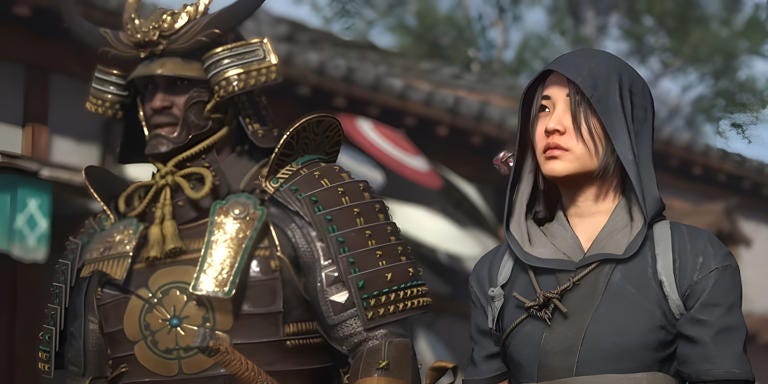
- Dual-Protagonist Gameplay: Players can switch between Naoe, a stealth-focused shinobi assassin, and Yasuke, a powerful samurai warrior.
- Graphics & Immersion: Early feedback highlights stunning visuals, detailed environments, and rich world-building.
- Combat System: Revamped to include stealth enhancements, improved parkour movement, and more fluid melee combat.
- Game Modes: Includes a Canon Mode and Immersive Mode, catering to both casual players and hardcore fans who want a more traditional experience.
Critics who have seen early gameplay say it feels like a major step forward for the franchise, blending the best elements of past Assassin’s Creed games while introducing new mechanics that keep it fresh.
But expectations are high. Assassin’s Creed Mirage (released in 2023) was a return to classic stealth mechanics, but it was a smaller game. Shadows is a full-scale open-world RPG, following the formula of Odyssey and Valhalla. That means Ubisoft needs it to deliver long-term player engagement — not just a strong launch.
Why Shadows Has to Succeed
Ubisoft’s financial targets rely on Shadows doing well. The company still believes it can hit €1.9 billion in net bookings this fiscal year, and this game is the biggest factor in making that happen.
A strong launch could:
- Boost Q4 sales significantly and help Ubisoft recover from its rough Q3.
- Drive more digital purchases, since the game is expected to have a big post-launch content plan.
- Reinforce investor confidence, proving that Ubisoft can still deliver industry-leading AAA titles.
But if the game underperforms, the consequences could be serious:
- Ubisoft would likely miss its financial targets, increasing pressure on leadership.
- The company’s reliance on cost-cutting rather than growth would become even more concerning.
- Confidence in the Assassin’s Creed franchise could take a hit.
This isn’t just another Assassin’s Creed release — it’s Ubisoft’s biggest test of the year. And with fewer major games in the pipeline, it needs Shadows to deliver more than just sales — it needs lasting engagement.
The Bigger Picture: What’s Next for Ubisoft?
Ubisoft is clearly in a transition phase. The company has been cutting costs, focusing on its strongest franchises, and re-evaluating its strategy for the future.
The financial results show that Ubisoft’s reliance on back-catalog sales isn’t enough to sustain growth. The company needs new hits, and right now, Assassin’s Creed Shadows is the most important piece of that puzzle.
At the same time, Ubisoft has confirmed that it is undergoing a strategic review, with an independent board committee looking at how to maximize value from its assets. The company hasn’t provided details on what that means yet, but it’s clear that big changes are on the horizon.
For now, the next few months will determine Ubisoft’s trajectory.
- If Assassin’s Creed Shadows performs well, Ubisoft can stabilize its finances and build momentum for the future.
- If it fails to meet expectations, Ubisoft’s cost-cutting and restructuring will likely continue, and the company could face even tougher decisions.
The gaming industry is moving fast, and Ubisoft is at a crossroads. What happens next depends on whether its biggest game of the year can deliver not just for players, but for the company’s future.
Stay Connected: Gaming Trends, Insights, and Your Take
Thank you for reading. Every day I look at the gaming industry, read up on things, and talk to industry people. In my Medium blogs, I try to give my readers and 1.5K followers a solid sense of trends, analysis, investments, and more in gaming. If you found this interesting, I’d appreciate it if you shared the article — but even more, I’d love to hear your thoughts in the comments! If you like to connect on Linkedin, feel free to send me an invite! And don’t forget to Subscribe Today! Get exclusive gaming industry insights from Reinout te Brake — a veteran with real data, deep expertise, & game-changing perspectives. Also, check my reading list of articles on gaming!
For a deeper insights into Ubisoft’s current situation, check out this deep dive
