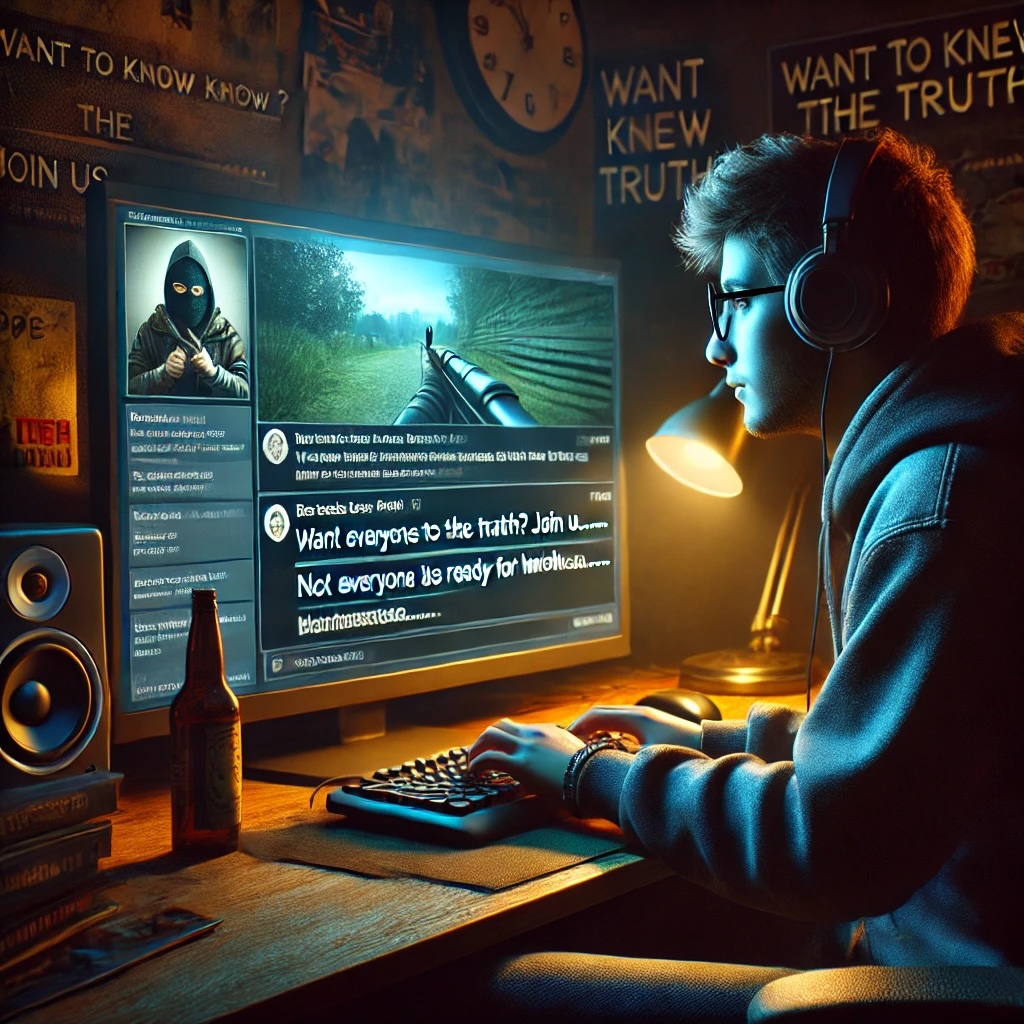
Gaming platforms have become unexpected battlegrounds in the fight against extremism. Here’s how radical groups infiltrate communities and what can be done to stop them.
The Hidden Danger Lurking in Your Favorite Games
A 14-year-old logs into his favorite game—Minecraft. He’s not there to build castles or explore virtual worlds today. Instead, he finds himself in a server where players are discussing something unsettling: historical symbols, conspiracies, and a “secret group” that promises to tell him the truth about the world. It starts as a joke. Then a challenge. Then something far more serious.
Gaming has always been an escape—a place where players can explore, compete, and create. But in recent years, extremist groups have discovered that these virtual worlds offer more than just entertainment: they offer a fertile ground for recruitment. Platforms like Minecraft, Roblox, and Discord have become unexpected hotspots for radicalization, with extremist organizations using in-game chat, mods, and private servers to groom young players.
It sounds like a dystopian novel, but it’s real—and it’s happening now. Reports from law enforcement agencies and cybersecurity experts warn that far-right and extremist groups are deliberately infiltrating online gaming communities to spread propaganda and recruit vulnerable individuals.
Why gaming? The answer is simple: anonymity, global reach, and immersion. Unlike social media, where extremist content can be flagged and removed, gaming platforms lack the same level of scrutiny—allowing bad actors to operate under the radar.
This article uncovers how gaming has become a tool for extremism, the tactics groups use, and what companies, players, and policymakers must do to fight back.
The Evolution of Online Gaming Communities – And Why Extremists Target Them
For decades, video games have been a place for social connection. From the early days of LAN parties and arcade competitions to today’s massive multiplayer worlds, gaming has evolved into a global community. With over 3 billion gamers worldwide, it’s one of the most engaging, immersive, and interactive digital spaces in existence.
But with that growth comes vulnerability.
Gaming as a New Social Hub
Unlike traditional social media platforms like Facebook or X (formerly Twitter), gaming communities offer a unique blend of anonymity, engagement, and shared experiences. Players spend hours building friendships, joining guilds, and communicating in real-time—often forming stronger connections than they do on social networks.
Why does this matter? Because for extremist groups looking to recruit new members, gaming platforms offer the perfect mix of low oversight and high engagement.
Why Extremists Are Infiltrating Online Games
Extremist groups have always adapted to the digital age. If social media was the first battleground, gaming is the next. Here’s why:
Immersion & Anonymity
Unlike social media, where real identities are often tied to accounts, gaming communities allow users to operate anonymously, making it easier for extremists to groom individuals without detection.
Shared Experiences = Trust
Playing a game together builds trust and camaraderie—a factor extremist recruiters exploit. By befriending players through casual interactions, they create a sense of belonging before introducing radical ideologies.
No Moderation Gaps
While platforms like YouTube and Facebook have AI-driven moderation tools to detect and remove extremist content, gaming environments lack the same level of oversight. Private servers, in-game chat, and Discord groups make it easy for extremists to spread hate without being detected.
Creative Tools for Propaganda
In games like Minecraft and Roblox, players can create their own custom environments. Neo-Nazi groups have reportedly used these tools to recreate concentration camps, extremist symbols, and virtual training grounds for ideological indoctrination.
A study from the Royal United Services Institute (RUSI) found that:
- 34% of players had encountered extremist content while gaming.
- 25% had been encouraged to join extremist groups through in-game interactions.
The numbers are alarming—and the problem is growing.
How Radical Groups Are Exploiting Gaming Right Now
Extremists are not just spamming chat rooms with hate speech. Their tactics are sophisticated, calculated, and designed to be difficult to detect. Here’s how they operate:
Infiltrating Popular Servers
- Extremist recruiters join public Minecraft and Roblox servers and slowly introduce radical ideologies under the guise of jokes, memes, or history discussions.
- This gradual approach desensitizes young players to extremist rhetoric over time.
Custom Game Mods & Maps
- Some groups create custom mods or maps containing hate symbols, propaganda, or extremist references.
- These maps are shared on forums and private Discord groups, creating a closed-loop system where extremist content spreads undetected.
Using Discord & Private Groups as Recruitment Tools
- Extremist groups invite players into private Discord servers, where radical ideologies are introduced in stages—starting with harmless discussions before escalating to hate speech.
- Since these groups are invite-only and encrypted, they’re harder to monitor than public forums.
Leveraging Gaming YouTubers & Streamers
- Some extremists pose as content creators, spreading misinformation and radical ideas through gaming-related commentary.
- They blend extremist talking points into general gaming content, making it more palatable for younger audiences.
Exploiting Competitive & Clan Culture
- Extremist recruiters form clans and teams, where ideological conformity is reinforced through groupthink and peer pressure.
- Players are told that joining the group means being part of something bigger, stronger, and more powerful.
For extremist groups, these strategies aren’t random—they are designed to be gradual, persuasive, and deeply integrated into gaming culture.
The Industry & Government Response: Are We Doing Enough?
As reports of extremist infiltration in gaming communities surface, the natural question arises: What are gaming companies, law enforcement agencies, and policymakers doing to stop it? The answer is complex. While some efforts have been made, the response lags behind the growing threat.
Gaming Companies: Slow to Act, Struggling to Keep Up
Gaming companies were not built to handle radicalization threats. Unlike social media giants like Meta and YouTube, which have invested in AI moderation tools and content flagging, many game developers and publishers lack the infrastructure or expertise to combat extremism at scale.
Here’s how major platforms are addressing the issue:
Microsoft (Minecraft)
- Microsoft, which owns Minecraft, has acknowledged extremist misuse of its platform.
- The company has strengthened community guidelines and moderation tools, but enforcement remains challenging due to the sheer number of private servers.
- Players can now report harmful content and extremist activity, but the system relies heavily on user-initiated complaints.
Roblox Corporation
- Roblox has banned thousands of accounts linked to extremist activity.
- It uses AI-driven chat moderation to filter hate speech, yet private servers still allow unchecked content sharing.
- The company partners with law enforcement, but reactive measures only scratch the surface of the problem.
Valve (Steam) & Discord
- Steam has moderated extremist community forums in the past but continues to struggle with hate groups reforming under new names.
- Discord, despite removing hundreds of extremist servers, remains a breeding ground for underground radical groups due to its encrypted, private nature.
Why Gaming Platforms Struggle to Enforce Rules
- Decentralization: Unlike centralized social media, gaming communities operate across multiple servers, forums, and private chats, making content moderation fragmented.
- Massive User Base: Games like Minecraft (140M+ monthly players) and Roblox (230M+ users) generate billions of interactions daily, making manual moderation nearly impossible.
- Constantly Evolving Tactics: Extremist groups change usernames, switch servers, and adapt messaging faster than moderation teams can catch them.
Law Enforcement & Government Response: Playing Catch-Up
Authorities are becoming more aware of gaming’s role in radicalization, but most counterterrorism efforts still focus on traditional social media.
Global Law Enforcement Efforts
Europol & FBI
- Law enforcement agencies have stepped up surveillance on online gaming communities.
- FBI reports indicate that extremist groups are increasingly using gaming spaces to avoid detection on traditional social media.
- Europol has issued warnings about encrypted gaming platforms being used for radicalization.
Australia’s Counter-Terrorism Response
- The Australian Federal Police (AFP) and ASIO have highlighted gaming radicalization in multiple terrorism cases.
- Two Australian teens were convicted under counter-terrorism laws, with investigators confirming their involvement in extremist gaming groups. (The Guardian)
U.S. Department of Homeland Security (DHS) Initiative
- DHS has launched online safety awareness programs targeting gaming communities.
- However, most efforts remain focused on preventing school shootings, with less emphasis on extremist recruitment via games.
Challenges in Law Enforcement Monitoring
Despite these efforts, surveillance and countermeasures face major obstacles:
– Privacy & Encryption: Many extremist groups use invite-only private servers (Discord, Telegram) that law enforcement cannot easily access.
– Jurisdiction Issues: Radicalization in gaming communities is global, making cross-border enforcement slow and complex.
– Lack of Awareness: Many policymakers still underestimate the role of gaming in extremist recruitment.
Are These Responses Enough? The Growing Need for Action
Despite increased awareness, neither gaming companies nor governments have found a scalable solution to extremist radicalization in games.
What Needs to Change?
- AI-Powered Content Monitoring: More sophisticated real-time moderation tools that detect extremist symbols and coded language in games.
- Industry-Government Collaboration: Faster response frameworks where law enforcement agencies can directly coordinate with gaming companies.
- Parental & Player Education: Greater awareness campaigns on how extremist groups operate inside games.
The reality is gaming radicalization won’t disappear unless we actively tackle it—and right now, efforts remain piecemeal and reactive rather than proactive and systemic.
The Hidden Battle Inside Gaming – And What We Must Do Next
For millions of players, video games are a source of joy, creativity, and connection. But beneath the surface, a hidden war is being waged—one where extremist groups are actively exploiting gaming platforms to spread propaganda and recruit new members.
We’ve seen how games like Minecraft, Roblox, and Discord servers have become breeding grounds for radicalization, how extremist groups use private servers, coded language, and clan culture to desensitize and indoctrinate young players, and how gaming companies and governments have struggled to respond.
Despite some action from law enforcement and gaming platforms, the response remains slow, reactive, and fragmented. The current countermeasures—banning accounts, moderating chats, and issuing safety warnings—are not enough to combat the sophisticated and evolving tactics of extremist groups.
What Needs to Happen Next?
To truly tackle this issue, we need a multi-layered, proactive approach.
Gaming Companies Must Take Responsibility
- Invest in AI-driven moderation tools that detect extremist content in real-time.
- Strengthen automated content detection for symbols, keywords, and coded messages.
- Make community reporting tools more accessible and effective.
Governments & Law Enforcement Must Act Faster
- Improve cross-border cooperation to track and shut down extremist recruitment networks in gaming.
- Provide specialized training for counterterrorism agencies on how gaming communities are exploited.
- Enforce stricter penalties for those using gaming platforms for extremist activities.
Parents & Players Need More Awareness
- Teach young gamers how to spot extremist grooming tactics—and how to report them.
- Encourage open conversations about what happens in online games—because secrecy is what allows radicalization to thrive.
- Support non-profits and watchdog organizations focused on digital safety in gaming.
A New Standard for Online Safety in Gaming
The gaming industry needs a paradigm shift. Just as social media companies evolved their content moderation to fight misinformation and online hate, gaming companies must recognize their responsibility in combating extremism.
Because if they don’t, gaming won’t just be a pastime—it will become a battlefield for ideological warfare.
What Can You Do?
🔍 Have you ever encountered extremist content in a game? Share your experience in the comments.
💡 What should gaming companies be doing differently? Let’s discuss solutions together.
📢 Spread awareness—share this article with fellow gamers, parents, and industry professionals.
The fight for safer gaming spaces starts now. Are we ready?
My Personal Thoughts
With billions of people gaming worldwide, the future of online safety depends on awareness, collaboration, and accountability. If gaming companies, law enforcement, and players work together, we can keep gaming what it was always meant to be—a place for fun, creativity, and community, not radicalization.
Extremist recruitment in gaming isn’t just speculation—it’s backed by real data. Here are some critical reports:
📖 The Guardian: Australia’s Counter-Terrorism Efforts in Gaming
📖 The Times: Extremists Using Minecraft for Radicalization
What’s your take on this? Have you seen similar trends in gaming communities?
Let’s discuss.
We hope you enjoyed this deep dive into the biggest gaming events of the week! If you found this article insightful, feel free to share it on social media to keep the conversation going. And if you’d like to stay updated on the latest gaming industry trends, don’t forget to subscribe to receive notifications whenever Reinout publishes a new article. We appreciate your support and hope you’ll keep coming back to our site for more in-depth analysis and industry insights. Happy gaming!