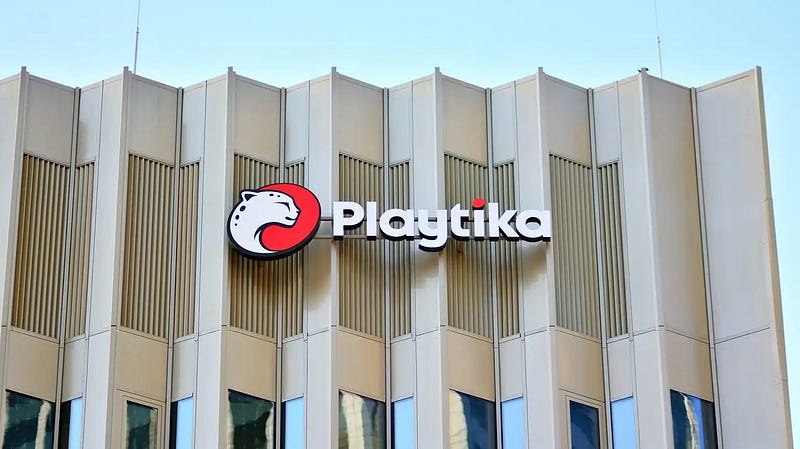
Smart Strategy or High-Stakes Gamble? A $2 Billion Bet on the Future. Playtika, once a rising force in mobile gaming, is making a bold move — one that could define its future.
The company has committed $300 million to $450 million for “bolt-on” acquisitions over the next three years, supplementing its $1.95 billion purchase of SuperPlay in late 2024. This is an aggressive push to expand beyond social casino gaming into more sustainable growth areas.
But there’s a problem.
- Revenue is stagnating — it peaked at $2.6 billion in 2022 and has barely moved since.
- Net income has dropped sharply, from $276 million in 2022 to $162 million in 2024.
- Customer acquisition costs are rising, squeezing profitability.
Rather than focusing on organic growth, Playtika is choosing to buy its way forward. But is this a visionary long-term strategy, or is the company papering over deeper structural issues?
This article takes a deep dive into Playtika’s acquisition strategy, examining whether it’s a calculated masterstroke — or a high-stakes gamble that won’t pay off.
Subscribe Today! Get exclusive gaming industry insights from Reinout te Brake — a gaming veteran with real data, deep expertise, & game-changing perspectives. Join 1.3K+ others — subscribe now and stay ahead!
Playtika’s Problem: A Growth Engine Running Out of Fuel
Playtika’s business model has long been highly profitable but limited in scope.
The company built its success on social casino games, a genre that thrives on user engagement but struggles with long-term retention. Monetization relies on freemium mechanics, where a small percentage of players drive most of the revenue.
This worked brilliantly for years, but recent trends highlight structural weaknesses:
✔ Revenue peaked at $2.6B in 2022 and has been flat since.
✔ Net income has dropped 41% in two years, signaling margin pressures.
✔ User acquisition costs have surged, thanks to Apple’s privacy changes restricting ad targeting.
The challenge? Playtika isn’t just competing against gaming giants like Scopely, Zynga, and Tencent — it’s also fighting against the industry’s shifting economics.
User behavior is evolving. New players aren’t sticking around as long as they used to. Legacy monetization models are under strain.
Faced with these realities, Playtika is making a deliberate pivot — but is it the right one?
Their Solution? Buy Growth Instead of Building It
Faced with stagnating revenue and rising costs, Playtika is turning to its go-to strategy: acquisitions.
Rather than investing in organic growth — developing new games in-house — the company is spending billions to buy already-successful studios. The most notable example?
✔ SuperPlay acquisition ($1.95 billion) — The Israeli studio behind Dice Dreams, a mobile game that has rapidly gained traction in the casual gaming space.
But that’s just the beginning.
- Playtika has earmarked $300M-$450M for additional M&A deals over the next three years.
- These are expected to be “bolt-on” acquisitions — smaller studios that can be quickly integrated into Playtika’s portfolio.
- The goal? Expand beyond social casino gaming into the broader casual and mid-core mobile gaming markets.
This strategy follows a familiar Playtika playbook:
- Identify fast-growing studios with games that already have a strong user base.
- Use Playtika’s data-driven monetization expertise to boost revenue from those games.
- Scale quickly by integrating them into its existing ecosystem.
On paper, it makes sense.
- Dice Dreams has been one of the fastest-growing mobile games, giving Playtika an entry into a broader casual audience.
- By acquiring proven winners, Playtika avoids the high failure rate of in-house game development.
But there’s a key risk — can Playtika turn acquisitions into long-term engagement?
The Risk? What If This Strategy Fails?
Acquiring studios is the easy part. Integrating them successfully — and turning them into long-term revenue engines — is much harder.
While Playtika has built a reputation for data-driven monetization and aggressive user acquisition, its reliance on M&A as a primary growth strategy carries significant risks.
The Integration Challenge: Can Playtika Scale What It Buys?
Historically, Playtika’s strength has been monetization optimization — taking existing games and boosting revenue per player through data science and engagement mechanics.
But not every acquisition succeeds.
- In 2021, Playtika acquired Reworks (makers of Redecor, a home design game) for $400 million, expecting to scale it using its in-house expertise.
- By 2023, Playtika wrote down a significant portion of that investment, admitting that the game didn’t integrate well with its portfolio.
This raises a critical question: Will Playtika’s newly acquired studios, like SuperPlay, suffer the same fate?
✔ Dice Dreams is a fast-growing game, but can Playtika maintain its momentum once the initial hype fades?
✔ Casual gaming audiences behave differently than social casino players — retaining them long-term requires more than just monetization tools.
If Playtika fails to integrate and sustain growth, its acquisitions could become expensive write-offs rather than strategic wins.
Market Saturation: Is There Still Room to Grow?
The mobile gaming industry is more competitive than ever. Playtika isn’t just fighting for market share — it’s competing against:
✔ Scopely — Backed by Saudi Arabia’s Savvy Games Group, with deep pockets for acquisitions.
✔ Zynga (Take-Two Interactive) — Still one of the strongest names in casual mobile gaming.
✔ Tencent & NetEase — Expanding aggressively in Western markets with both in-house and acquired games.
✔ AppLovin & Unity — Not just game publishers, but also powerful ad-tech players that control distribution pipelines.
The key problem? User acquisition is getting harder and more expensive.
- Apple’s App Tracking Transparency (ATT) changes have disrupted Playtika’s ability to target high-value players with ads.
- User retention rates are dropping — as competition grows, keeping players engaged long-term requires constant content updates and live-service events.
- Even for successful games, growth ceilings exist — a hit game can only scale so far before engagement naturally declines.
If Playtika can’t overcome these obstacles, even a $2 billion M&A spree won’t generate lasting value.
Investor Sentiment: The Market Isn’t Convinced
Playtika’s stock is down over 40% from its IPO price, and investors remain skeptical about its reliance on acquisitions.
- Q4 2024 earnings showed a net loss of $16.7 million, despite stable revenues.
- Marketing costs surged to $705 million in 2024, highlighting Playtika’s dependence on paid user acquisition.
- Analysts are questioning whether Playtika’s high M&A spending is truly strategic — or just a way to keep revenue numbers afloat.
While Playtika has successfully scaled previous acquisitions, the market is looking for clear evidence that its current strategy will deliver sustained profitability, not just short-term revenue spikes.
The Market’s Verdict: What Investors Think
Playtika’s acquisition spree has drawn mixed reactions from investors. While some see it as a bold growth strategy, others fear it’s a sign of deeper structural problems. The market has not been kind — Playtika’s stock has dropped over 40% from its IPO price, and its financials reveal underlying struggles that go beyond its M&A strategy.
So, what are investors worried about? And what could restore confidence?
The Stock Price Tells the Story
Playtika debuted on the NASDAQ in 2021 at $27 per share. Today, it trades at around $5.70 — a stunning collapse for a once-promising gaming company.
This decline isn’t just about Playtika’s performance — it reflects broader investor skepticism around mobile gaming stocks.
- Zynga was acquired by Take-Two in 2022 — a sign that standalone mobile publishers struggle to stay competitive without a larger corporate backing.
- AppLovin pivoted away from publishing games entirely, choosing instead to focus on its ad-tech business.
- Scopely secured a $4.9B buyout from Savvy Games Group, highlighting that deep-pocketed investors are picking winners in the consolidation wave.
The pattern is clear: investors aren’t betting on standalone gaming publishers anymore — they want scale, ecosystem control, or tech-driven advantages.
So where does that leave Playtika?
✔ Its core social casino business still prints money, but growth has slowed.
✔ Casual gaming acquisitions look promising, but Playtika hasn’t proven it can successfully expand beyond its roots.
✔ Without a clear long-term differentiation strategy, Playtika risks being left behind in the consolidation race.
For investors, the jury is still out — and until Playtika can show real organic growth (not just revenue spikes from M&A), its stock will remain under pressure.
High M&A Spending = High Expectations
Investors don’t just care about how much Playtika is spending — they care about what it’s getting in return.
- $1.95B for SuperPlay (Dice Dreams) is a huge bet on casual gaming.
- $300M-$450M for future acquisitions signals continued reliance on M&A rather than in-house development.
- Meanwhile, Playtika’s core metrics aren’t improving — profitability is shrinking, and cost efficiency is getting worse.
So far, Playtika hasn’t convincingly shown that it can turn acquisitions into sustained engagement. Investors want to see post-acquisition success before they reward the company with a higher valuation.
Key questions the market is asking:
✔ Can Playtika retain and grow SuperPlay’s audience post-acquisition?
✔ Will the company keep spending aggressively even if new acquisitions don’t deliver?
✔ How does Playtika differentiate itself in an era where gaming publishers are getting absorbed by larger media giants?
If Playtika can’t answer these questions with clear data and execution, investor skepticism will persist.
Playtika’s Next Move: Strategic Options on the Table
Given the low stock price and investor skepticism, Playtika may face external pressure to change course.
Here are three possible paths for Playtika in the near future:
Option 1: Prove M&A Success with Strong Post-Acquisition Execution
- If Playtika can show that Dice Dreams and future acquisitions deliver long-term engagement, it could restore confidence.
- This requires sustained revenue growth, not just short-term boosts.
Option 2: Explore a Takeover or Strategic Merger
- Given industry consolidation trends, Playtika could become a target for acquisition.
- A merger with a company like Scopely, Zynga, or even a private equity firm could provide scale and resources.
Option 3: Shift Strategy Away from Heavy M&A Spending
- If Playtika fails to prove its acquisitions are working, investors may demand a more conservative approach — focusing on profitability rather than aggressive growth.
Right now, Playtika needs to act decisively — or risk becoming just another struggling mobile publisher in a crowded market.
A Bold Move, But Can It Work?
Playtika is at a critical juncture — one that will determine whether it cements its place as a dominant force in mobile gaming or fades into the background as just another acquisition-dependent publisher.
Its $2 billion spending spree on M&A is either a calculated strategy to fuel long-term growth or a sign of deeper struggles in scaling its core business.
So, what’s the final verdict?
Let’s break it down.
What’s Working in Playtika’s Favor?
Despite investor skepticism, Playtika does have a few strong cards to play.
✔ A Proven Monetization Model:
- Playtika has built one of the most sophisticated data-driven monetization systems in the mobile gaming industry.
- Its ability to extract value from in-game economies has turned games like Slotomania and House of Fun into cash cows.
- If it can apply these same engagement tactics to newly acquired games, the upside is huge.
✔ A Strong Cash Flow Business:
- Unlike many game companies that burn cash chasing growth, Playtika is profitable and generates strong free cash flow.
- Even as net income declines, its business model still funds new investments without excessive debt risk.
✔ The SuperPlay Acquisition Looks Promising:
- Dice Dreams has shown impressive engagement metrics, attracting a wider audience beyond traditional social casino players.
- If Playtika scales this successfully, it could finally diversify beyond its casino-heavy portfolio.
These factors suggest that Playtika has the raw tools to execute its acquisition strategy successfully.
But there are major risks that can’t be ignored.
What Could Go Wrong?
Playtika is betting big on M&A, but history shows that acquisitions in gaming don’t always work out.
🚩 Acquisitions Don’t Always Scale as Expected
- The Reworks (Redecor) acquisition in 2021 was supposed to be a major growth driver.
- Instead, Playtika wrote down a significant portion of that investment by 2023.
- Why? The game didn’t retain players at a high enough level, and Playtika’s monetization tools weren’t as effective outside of social casino games.
🚩 User Acquisition is Getting More Expensive
- The golden age of cheap mobile advertising is over.
- Apple’s App Tracking Transparency (ATT) rules have made high-value user targeting much harder.
- Playtika still spends hundreds of millions per year on marketing, but without precise targeting, it risks lowering its return on ad spend (ROAS).
🚩 Market Competition is Ruthless
- Playtika isn’t just competing against other gaming companies — it’s competing for attention and screen time.
- Rivals like Scopely, Tencent, Zynga, and AppLovin have deeper pockets and stronger ecosystems.
- If Playtika can’t integrate and grow its acquisitions faster than its competitors, it could find itself losing market share despite spending big on M&A.
The Big Question: What’s Next for Playtika?
If Playtika’s M&A strategy works, it could position itself as one of the strongest independent mobile publishers, successfully expanding beyond social casino games.
If it fails to scale these acquisitions, the company risks:
- More write-downs on failed investments (like Redecor).
- Declining investor confidence and a stock price that continues to fall.
- Potentially becoming a takeover target for larger gaming firms or private equity buyers.
The next 12–18 months will be critical.
✔ If Playtika proves that its acquisitions fuel sustainable growth, it could restore investor confidence and push its stock price back up.
✔ If the strategy fails, Playtika may need to shift gears, focus on profitability over aggressive expansion, or even consider selling itself to a larger player.
Right now?
The gamble is on.
Industry Perspectives: Playtika’s Strategy in a Shifting Market
Playtika’s $2 billion acquisition spree has sparked debate: is it a bold long-term vision, or a high-stakes gamble in an increasingly volatile gaming market?
The mobile gaming industry is evolving rapidly, with subscription models, cloud gaming, and post-pandemic market corrections reshaping the landscape. As Playtika doubles down on M&A, its leadership remains confident, while industry analysts question whether buying growth will be enough to sustain its long-term trajectory.
Playtika’s Leadership: Why Acquisitions Still Make Sense
Despite concerns over declining profits and rising costs, Playtika’s leadership sees its aggressive M&A strategy as future-proofing the business.
“Acquiring SuperPlay is a strategic decision that underscores Playtika’s mobile gaming industry leadership. SuperPlay diversifies our portfolio with proven titles, strengthens our competitive edge in an ever-evolving market, and drives value for our shareholders.”
— Craig Abrahams, CFO, Playtika
This statement reflects Playtika’s confidence that acquiring high-performing studios will drive new revenue streams and reduce dependence on legacy titles.
But not everyone is convinced. Investors are wary of Playtika’s past struggles integrating acquisitions, as seen with Reworks (Redecor) in 2021, which resulted in a major write-down just two years later. The question remains — will Playtika’s new wave of acquisitions succeed where previous deals have stumbled?
The Post-Pandemic Gaming Shift: Industry Analysts Weigh In
The gaming sector boomed during the pandemic, but the landscape has changed dramatically:
- Economic pressures are reshaping consumer habits. Players are spending more cautiously, while rising interest rates put pressure on gaming companies to prove profitability rather than just growth potential.
- The mobile ad economy has weakened. Apple’s App Tracking Transparency (ATT) changes have made it harder for gaming companies to target high-value players, significantly increasing user acquisition costs.
- Industry consolidation is accelerating. Major players like Take-Two (Zynga), Scopely, and Tencent are securing market share through mega-deals, leaving smaller independent publishers struggling to compete.
An industry analysis summarized the situation:
“Rising interest rates, the return of players to offices and classrooms post-pandemic, and high-profile games failing to meet expectations have fundamentally reshaped the gaming landscape. The industry now faces a cascade of challenges: project delays, significant layoffs, and even shuttered studios.”
This volatile environment has created a divide in strategy — while some publishers are shifting towards cost-cutting and organic growth, Playtika is doubling down on acquisitions. The risk? If Playtika’s newly acquired games don’t scale profitably, its reliance on M&A could backfire.
Subscription Models and Cloud Gaming: A New Challenge for Playtika?
Beyond economic shifts, technology is reshaping how games are distributed and monetized.
✔ Subscription-Based Gaming is Surging
- The gaming subscription market is projected to grow from $10.92 billion in 2024 to $17.46 billion by 2029.
- Services like Xbox Game Pass, PlayStation Plus, and Apple Arcade are creating alternative revenue streams that challenge the traditional free-to-play model.
✔ Cloud Gaming is Redefining Accessibility
- Platforms like GeForce Now and Xbox Cloud Gaming are allowing players to stream high-quality games without expensive hardware.
- This trend could reduce the reliance on app stores, potentially disrupting Playtika’s mobile-first monetization model.
The Strategic Question: Can Playtika Adapt?
Despite these changes, Playtika has yet to signal a shift towards subscriptions or cloud-based engagement models.
While its M&A strategy is centered on expanding its game portfolio, industry analysts caution that future-proofing a gaming company requires more than just acquisitions — it requires adapting to new business models.
As the gaming industry evolves, Playtika’s success — or failure — will depend on whether its acquisitions drive sustainable player engagement in a rapidly shifting landscape.
Playtika’s leadership believes in its acquisition-first strategy, but market conditions are more complex than ever.
✔ Can Playtika turn its acquisitions into long-term engagement engines?
✔ Or will its strategy fall behind the industry’s larger shift toward subscriptions, cloud gaming, and new engagement models?
The next 12–18 months will determine whether Playtika is playing to win — or just buying time.
My Personal Thoughts
Buying studios is easy. Turning them into long-term revenue engines? That’s the real challenge.
If Playtika can make its acquisitions work, it has a chance to reshape its business for the future.
If not?
It risks becoming a cautionary tale of a gaming company that bet big — and lost.
What’s your take? Will Playtika’s strategy succeed, or is this a high-stakes gamble that won’t pay off?
The gaming industry is changing fast. Are you keeping up?
Every day, I track gaming trends, analyze market shifts, and talk to industry leaders. My goal? To give you real insights — data-driven, strategic, and ahead of the curve.
If you found this piece valuable, I’d love to hear your thoughts in the comments.
But, Tap the clap 👏 button 50 times or more if you enjoyed my story! It would help me to get more visibility for my article.
And if you want more, check out my curated reading list of must-read articles on gaming.
Want to stay ahead of the game? Follow me on LinkedIn for deep insights and industry analysis, or subscribe to our newsletter.