America’s $10 Trillion AI Buildout Faces a Delivery Problem
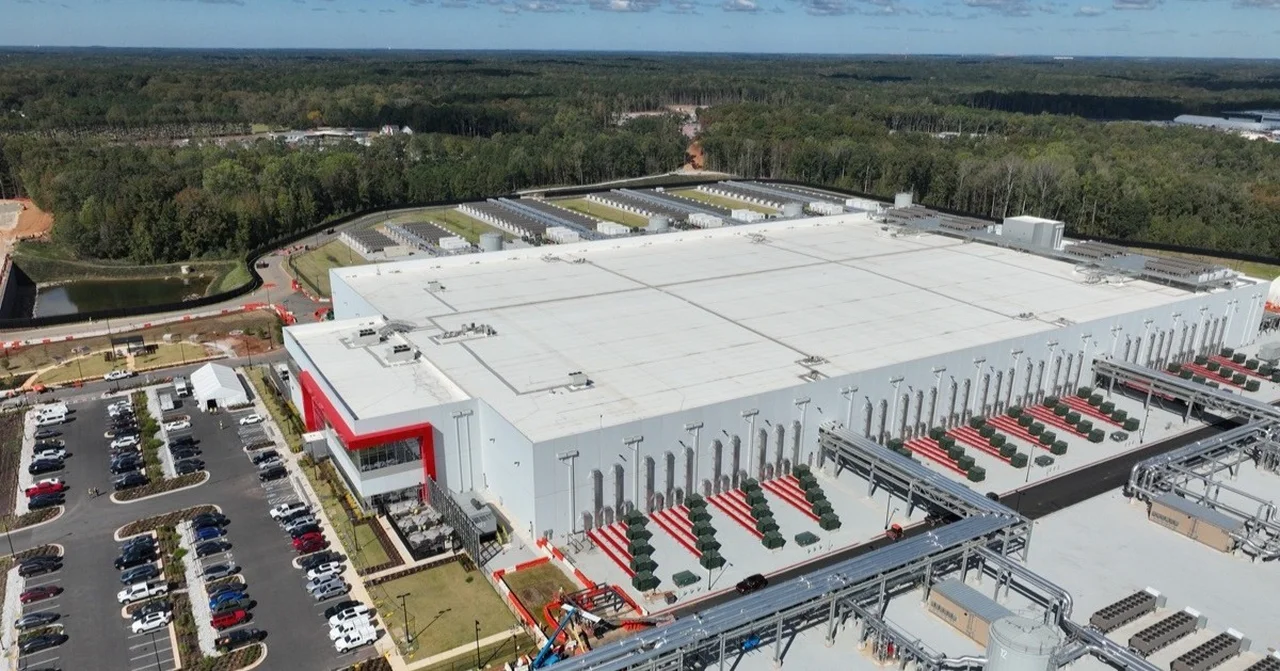
AI’s biggest bottleneck was supposed to be chips. Increasingly, the question is whether the infrastructure around them can be delivered.
Bernstein analysts consider only about 35% of the planned US data centre pipeline credible, according to the Financial Times.
Separately, Columbia economist Stijn Van Nieuwerburgh projects $10.3 trillion in US AI infrastructure investment between 2025 and 2032. That includes buildings, power systems, networking and chips.
Announcements versus deliverable capacity
These figures measure different things. They do not establish that 65% of a $10 trillion investment programme will disappear.
But they expose a distinction: spending commitments and usable computing capacity are different milestones.
A chip order still needs a building. That building needs electricity, permission to operate and financing that survives the construction period.
The FT reports that at least 47 US projects have been delayed, withdrawn or blocked this year, citing RegLayer.
What delivery risk means for AI customers
My concern is what happens between an announcement and delivery. If a promised facility arrives late, the AI company depending on it still has customers, product plans and costs.
For businesses buying AI services, that makes infrastructure execution relevant to supplier selection. An ambitious capacity announcement offers limited reassurance without a credible delivery schedule.
This does not prove the AI boom is collapsing. Brookings explicitly cautions against concluding that the financing already poses systemic risk comparable to earlier credit booms.
It does suggest a tougher test for the next announcement: secured power, funded construction and a realistic completion date.
What is an AI infrastructure commitment worth if the infrastructure cannot be built?
Further reading
- AI infrastructure: OpenAI chips, Cisco racks and Google agents — why useful AI depends on the systems around the model.
- Nvidia’s data centre growth and local AI — how cloud and local deployment can serve different tasks.