Democrats Won Congress. What Changes for Gaming, Tech, AI and Live Entertainment?
What Democratic control of Congress could mean for games, AI, tech, entertainment and dance, with political quotes and the limits of divided government.
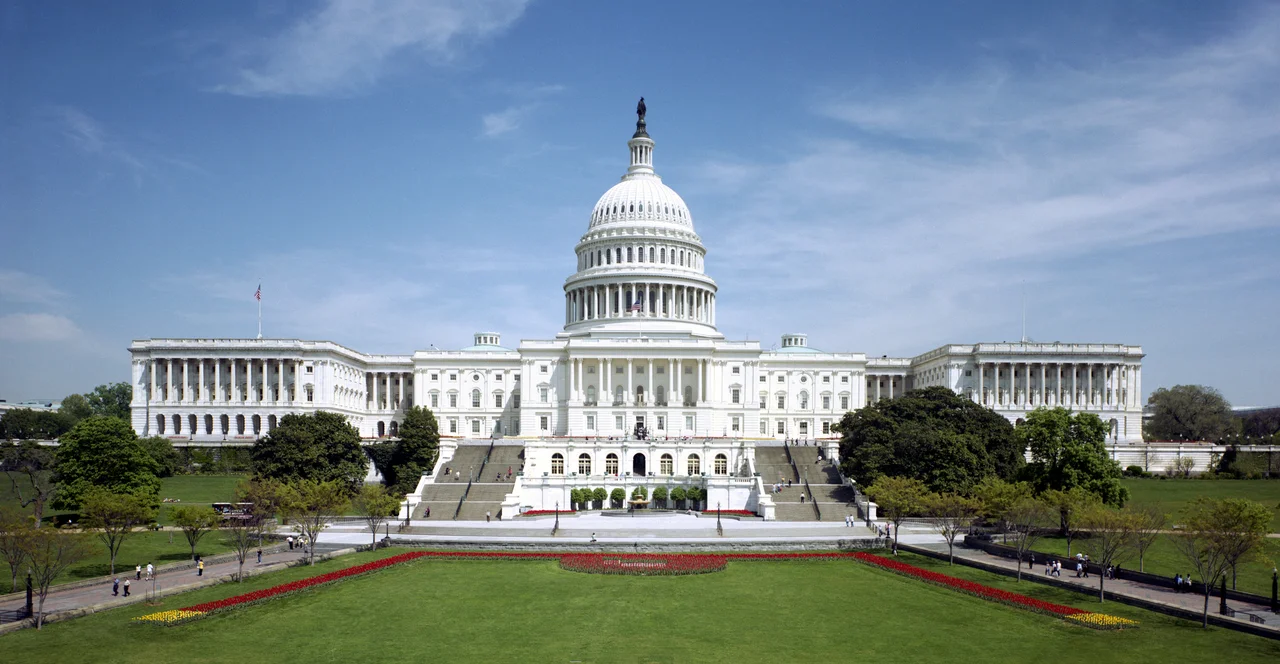
Democrats have won new power in Washington. That does not mean a game developer, AI founder and festival promoter have won the same thing.
CBS News projects Democratic control of both chambers following the November 3 midterms. Donald Trump remains president.
For these industries, the consequence is divided government: a Republican administration facing a Democratic Congress from January 2027. Expect greater scrutiny of business models, stronger arguments for consumer and creator protections, and negotiations over which proposals become law.
Whether that is better depends on where your business sits.
What the election actually changes
The incoming congressional terms begin on January 3. Democratic majorities can shape legislation, spending negotiations and committee investigations. They do not automatically replace agency leadership or rewrite existing rules.
Trump retains his veto. Overriding it requires two-thirds support in each chamber. Under current Senate procedures, ending debate on most legislation requires 60 senators.
That makes oversight and targeted agreements more immediately plausible than a wholesale Democratic policy reset. A hearing can expose a problem; it cannot itself change a contract, lower a ticket price or ban a product.
Gaming faces pressure from both parties
Gaming does not fit a simple Republican deregulation versus Democratic regulation story.
In 2019, Republican Senator Josh Hawley joined Democrats Ed Markey and Richard Blumenthal on proposed restrictions targeting loot boxes and pay-to-win features in games played by children.
Hawley attacked a model involving “placing a casino in the hands of every child in America”. In the same announcement, Blumenthal said: “Children are not cash cows to exploit for profit.”
Those are historical statements about a proposal, not evidence of a new nationwide ban. They demonstrate that opposition to certain monetisation practices crosses party lines.
There is also an enforcement record. On January 17, 2025, before Trump returned to office, the FTC announced a $20 million settlement with Genshin Impact developer Cognosphere, addressing allegations involving children’s privacy and misleading purchase practices.
A reasonable expectation is more congressional attention to spending transparency, children’s data and manipulative design. Studios should assess those systems before a complaint forces the issue.
Hardware costs matter too. The Entertainment Software Association warns that tariffs can increase consumer prices and weaken the wider games market. Congressional opposition could intensify that debate, but an election result is no promise of cheaper consoles.
Tech companies should distinguish growth from market power
A Democratic victory can benefit a smaller competitor while creating problems for its potential buyer.
On June 24, 2026, Democratic Senator Elizabeth Warren said: “Corporations don’t get a free pass from antitrust just because they’re using an algorithm.”
Her argument targets concentration and exclusion, including ways dominant technology companies can prevent rivals from competing.
For a startup dependent on a major platform, tougher competition policy could offer opportunities. For founders planning an acquisition exit, it could mean greater uncertainty around a deal.
Republicans are not uniformly relaxed about technology power either. Warren’s February 2026 letter on AI “reverse acqui-hire” deals noted that Republican FTC chair Andrew Ferguson had announced scrutiny of those arrangements.
The important distinction is between support for technological development and tolerance of concentrated control. Neither party’s position can be reduced to supporting or opposing tech.
More Democratic oversight is plausible. A guaranteed wave of blocked mergers is not.
AI faces the clearest conflict over speed and safeguards
The Trump administration has made rapid development a central priority. Its July 2025 AI Action Plan emphasises infrastructure, faster permitting, exports and removing regulatory barriers.
Vice President JD Vance expressed the argument in Paris on February 11, 2025, warning that excessive regulation could “kill a transformative industry just as it’s taking off”.
Prominent Democrats increasingly stress who bears the risks.
In July 2026, Markey’s AI Accountability Agenda proposed protections covering workplace surveillance, children, discrimination and data-centre impacts. These are policy proposals, not a complete set of enacted requirements.
The direction became more concrete on October 28. Democratic committee leaders asked frontier AI companies for ongoing safety-incident reporting within 48 hours, or 24 hours where critical infrastructure appeared involved. That was an oversight request, not a new statutory deadline.
Democrats also support AI development. In 2024, Chuck Schumer worked with Republican senators Mike Rounds and Todd Young, and Democrat Martin Heinrich, on a bipartisan innovation and safety roadmap.
State policy matters independently. California’s Democratic governor Gavin Newsom signed SB 53 in September 2025, establishing a frontier AI transparency and safety framework. A federal election does not erase that layer of governance. Companies need to distinguish obligations already applying to them from congressional proposals that may never pass.
For businesses, the likely pressure is towards documenting risks, explaining automated decisions and demonstrating accountability. Whether that produces trust or expensive compliance will depend on the rules’ design.
Entertainment has bipartisan allies on digital replicas
For actors, musicians and voice performers, AI policy can determine who controls their identity.
Republican Senator Marsha Blackburn and Democratic Senator Chris Coons are leading partners on NO FAKES legislation addressing unauthorised digital replicas.
Introducing the revised proposal in May 2026, Blackburn said: “AI should empower innovation”, before warning against exploitation of people’s voices and likenesses.
That complicates the assumption that Democrats protect artists while Republicans protect AI companies.
It also exposes a difficult boundary. On September 30, Republican Senator Ted Cruz objected to passing the bill by unanimous consent, citing concerns about protections for political parody. Blackburn disputed his assessment.
The dispute concerns how to protect identity without suppressing lawful expression.
A Democratic Congress could give creator protections greater attention, but agreement on the principle does not settle the wording. Businesses commissioning synthetic performances should address consent, permitted uses and compensation contractually rather than wait for Washington.
Workers have another reason to watch Democrats. The party’s 2024 platform supported workers having a voice in workplace AI deployment and sharing its economic gains. That is an established policy position, not a newly enacted employment right. For studios, the potential consequence is greater political pressure to negotiate how automation changes work, alongside the commercial pressure to reduce production costs.
Protection against impersonation also does not automatically resolve separate copyright disputes over AI training.
Live entertainment has a sharper competition dispute
Ticketing offers a concrete disagreement over remedies.
Following the Justice Department’s March 2026 settlement announcement involving Live Nation, Democratic Senator Amy Klobuchar argued that “the only way to make live events truly affordable and competitive for fans, artists, and venues is to break up Live Nation”.
The Justice Department’s case record documents the settlement notice and subsequent proposed judgment. Congressional criticism does not itself undo those proceedings.
Republicans have also pursued ticketing reforms. Trump’s March 31, 2025 executive order directed action on scalping, bots, price transparency and competition enforcement.
The distinction is therefore about tools and ambition as well as party identity.
Independent promoters could benefit if reforms genuinely improve access to venues and ticketing. Large integrated operators could face more political pressure. Neither outcome guarantees lower prices when artist fees, production costs and demand remain influential.
Dance depends heavily on local decisions
Electronic music and nightlife do not have one unified federal party policy.
Venue economics depend on zoning, licensing, operating conditions and the ability to host audiences safely. Congressional control alone does not determine those decisions.
There are specific Democratic examples. In October 2017, New York council member Rafael Espinal said “Today NYC will right a historical wrong” while championing repeal of the city’s Cabaret Law licensing requirement. Further zoning reforms followed in 2024, addressing remaining restrictions on dancing.
These are meaningful precedents, not proof that every Democratic administration supports nightlife or every Republican administration opposes it.
For a Dutch promoter or touring DJ, the practical question is which authority controls the obstacle: federal rules, state policy or city permits. Lobbying the wrong level of government can waste an entire planning cycle.
What could the next two years bring?
Three scenarios deserve attention.
The most plausible starting point is greater oversight with selective legislation. AI safety, ticketing and consumer protection already have active political sponsors.
A more productive outcome would combine innovation with workable protections: clearer consent rules for performers, transparent purchases and fairer market access.
A less productive outcome would bring legislative stalemate alongside conflicting requirements, leaving smaller businesses to absorb uncertainty.
These are scenarios, not forecasts of enacted policy. Watch committee agendas, bill text and agency actions before changing budgets.
For European companies serving Americans, changes could affect platform terms, contracts and commercial opportunities. US political developments do not replace their separate European obligations.
Are Democrats better for these industries? Potentially for consumers, workers, independent creators and businesses seeking fairer access. Less comfortably for companies whose margins depend on opaque charges, weak consent or market dominance.
But regulation can also burden small firms, while faster development can create opportunities.
The useful test is whether the resulting rules make it easier to build a sustainable business, reach an audience and retain a fair share of the value created.
Will this Congress deliver that?
Filed under